
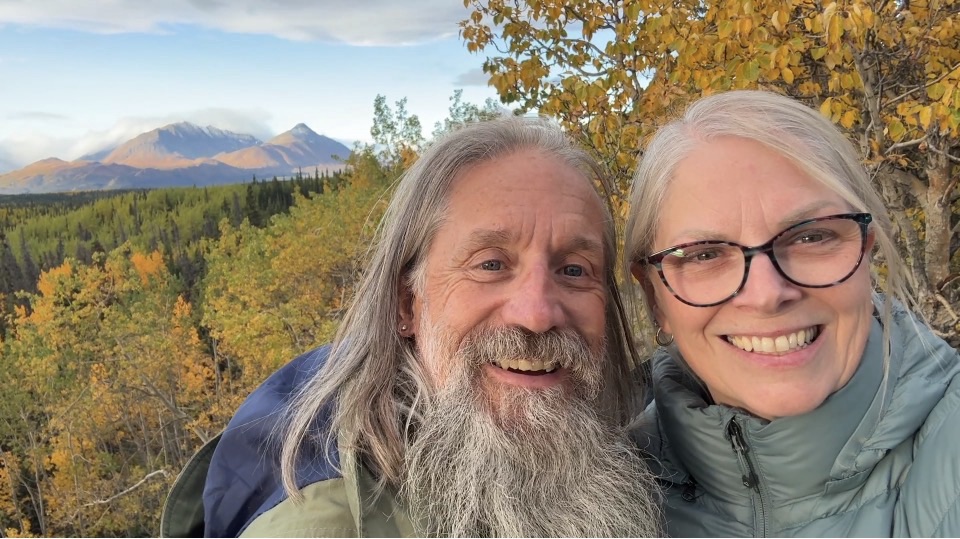
The slogan for the Yukon is “Larger Than Life” – and it’s true. We are in LOVE with the Yukon. Not the kind of love that says, “pack your things, we’re moving!”
Eric and I have both lived in places where the average winter temperature is in the negative double digits, and summer has mosquitoes that rival small birds.
But we have a deep love for the land and its beauty.
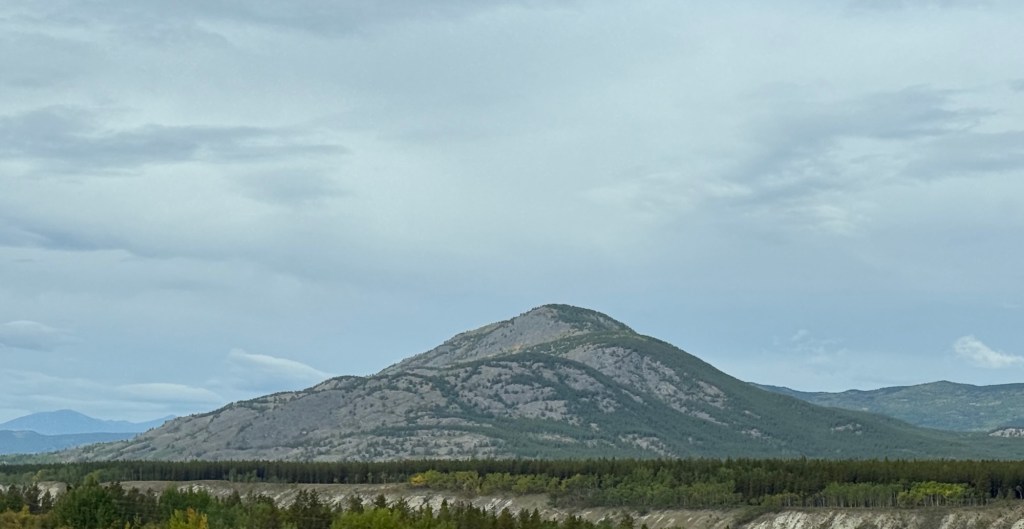
We have spent a good deal of time exploring. Checking out places (weather permitting) and soaking up the history. We’ve slowed down considerably – and are enjoying every moment of it.
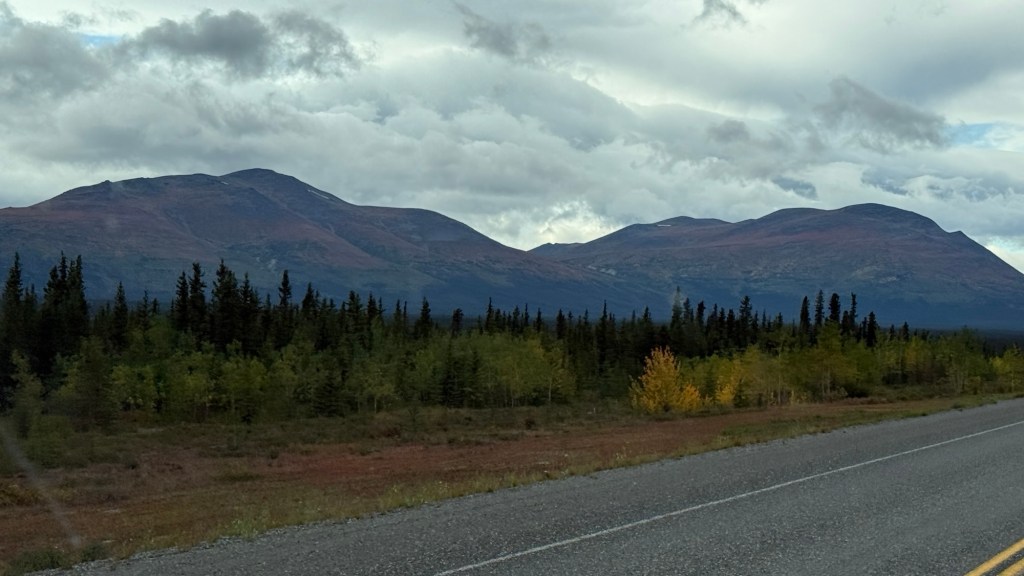
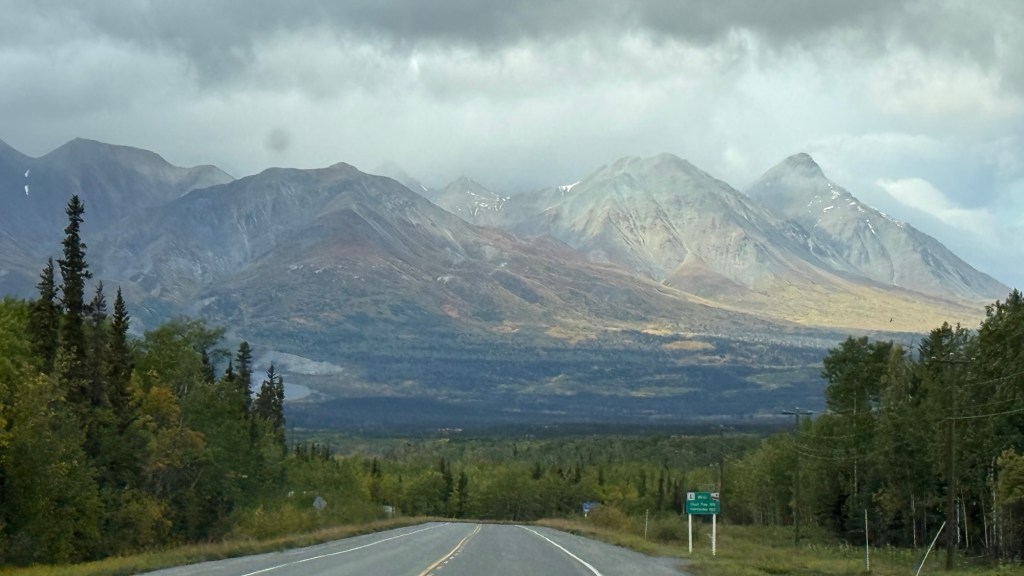
Yesterday, we left our river campsite just outside Whitehorse and headed back onto the Alaska Highway, heading northwest. As we travelled through the Ibex Valley, the mountain silhouettes were so striking. Every curve in the road gives way to more incredible mountain views.
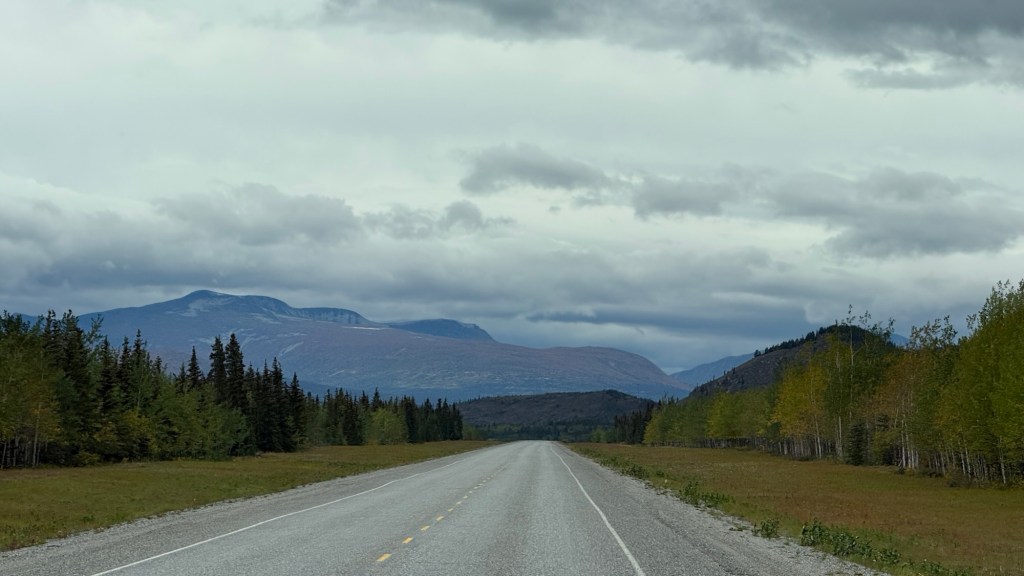
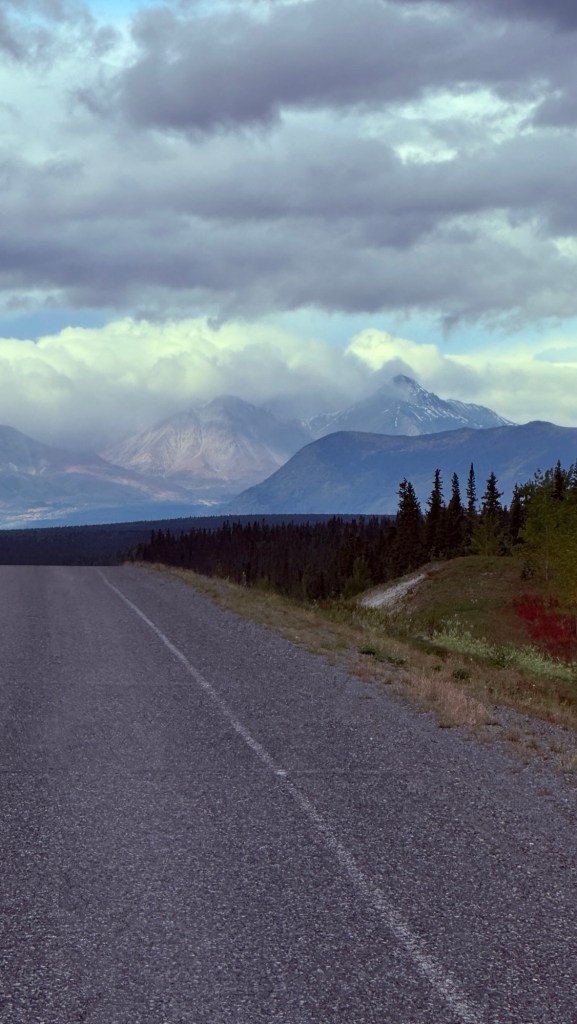
The weather hasn’t been ideal: a bit of rain, a bit of wind and a fair bit of cloud. It has cleared up a bit at the end of each day, so that’s been great.
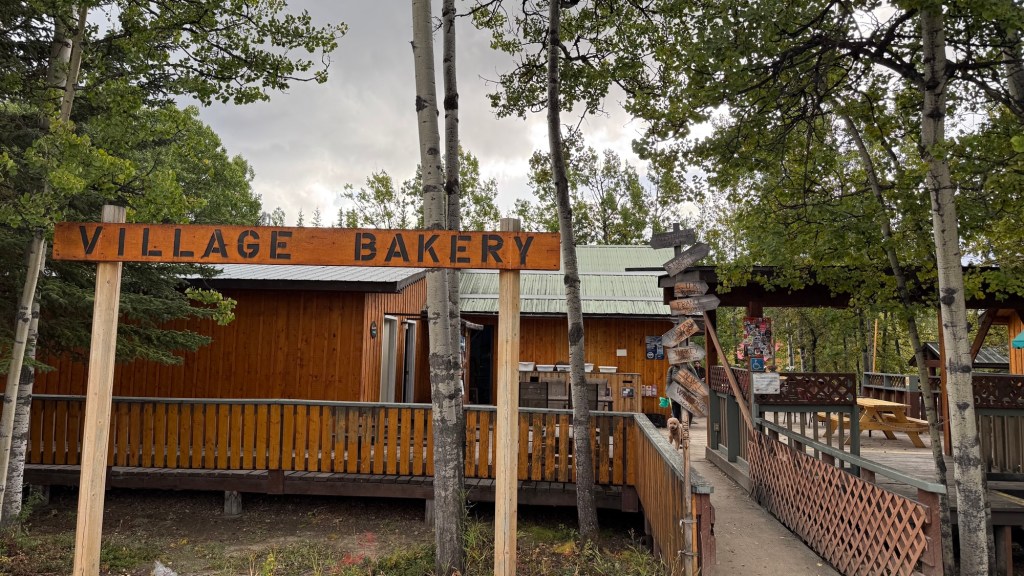
We popped into Haines Junction to check things out. We found ourselves a little bakery/cafe and got some goodies to go. Haines Junction is near the beginning of Kluane National Park and Reserve.
We drove a bit further down the highway, soaking up all the beauty.
A ways down the road, Eric took a turn off the highway. It was about 2km off the highway, through a very narrow autumn-lit path that opened up to a good-sized site on the side of a mountain.
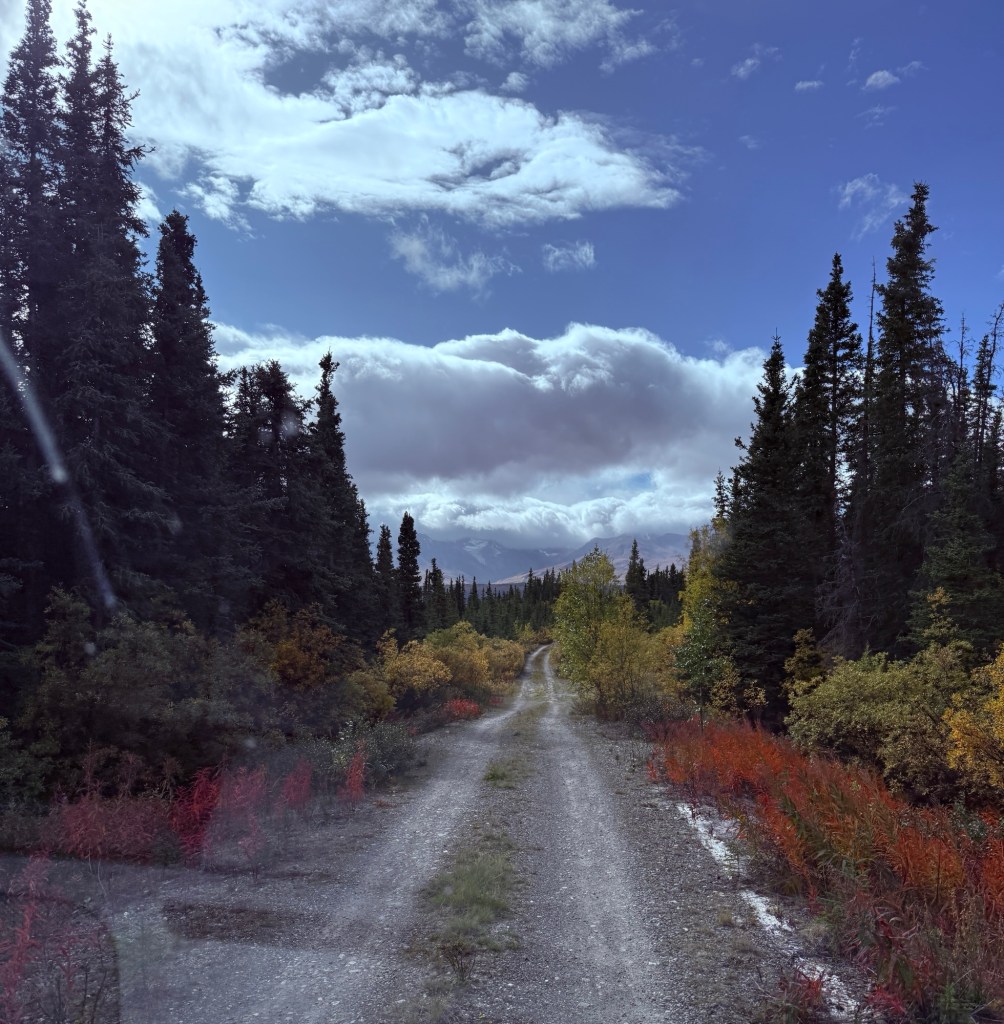
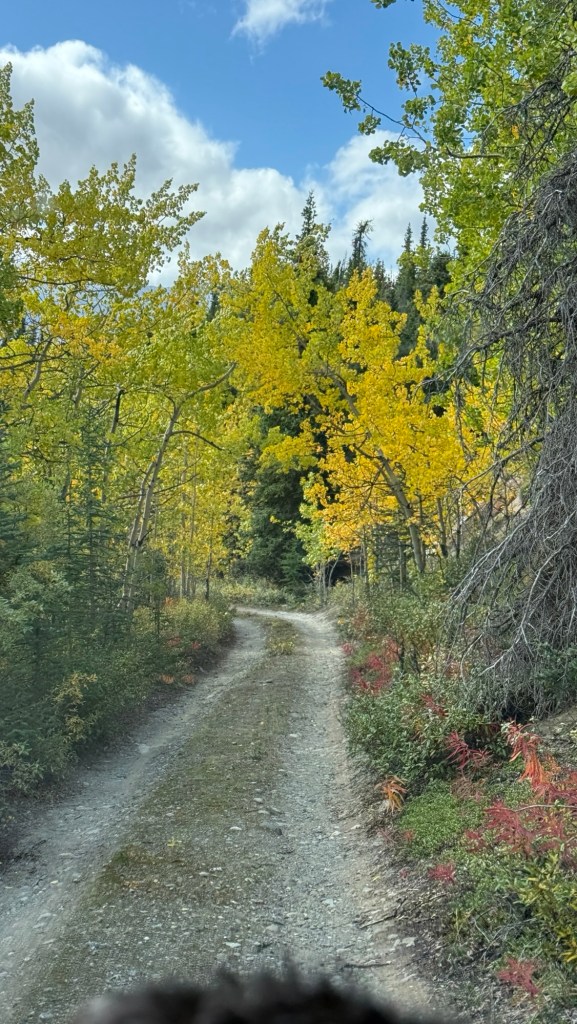
There were a few places you could camp, but why not take that front seat view?
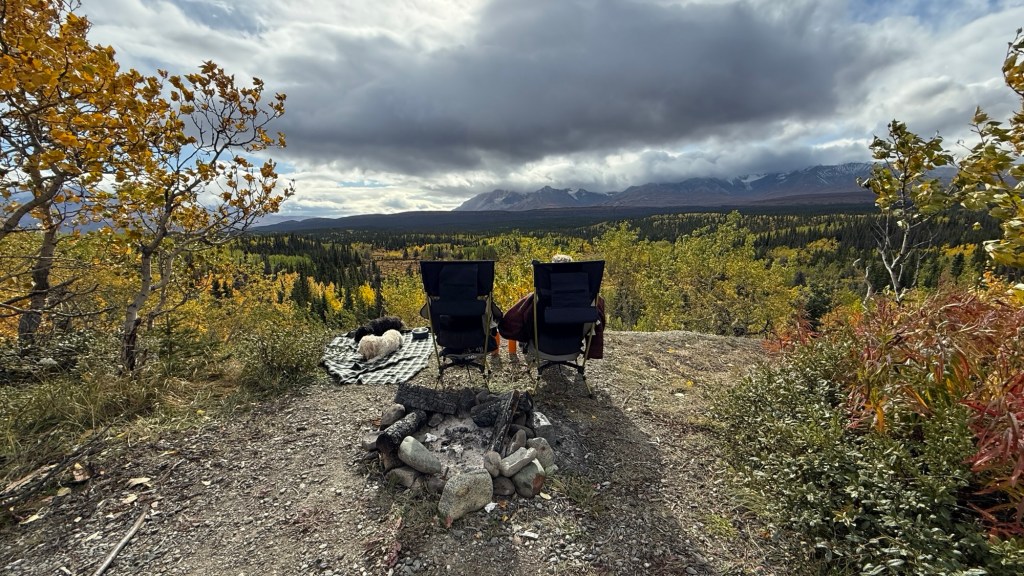
We enjoyed being outside until it got too windy. So we had warm beverages inside the cabin. After dinner, the clouds parted and the wind died down. That wind really opened up some spectacular views!
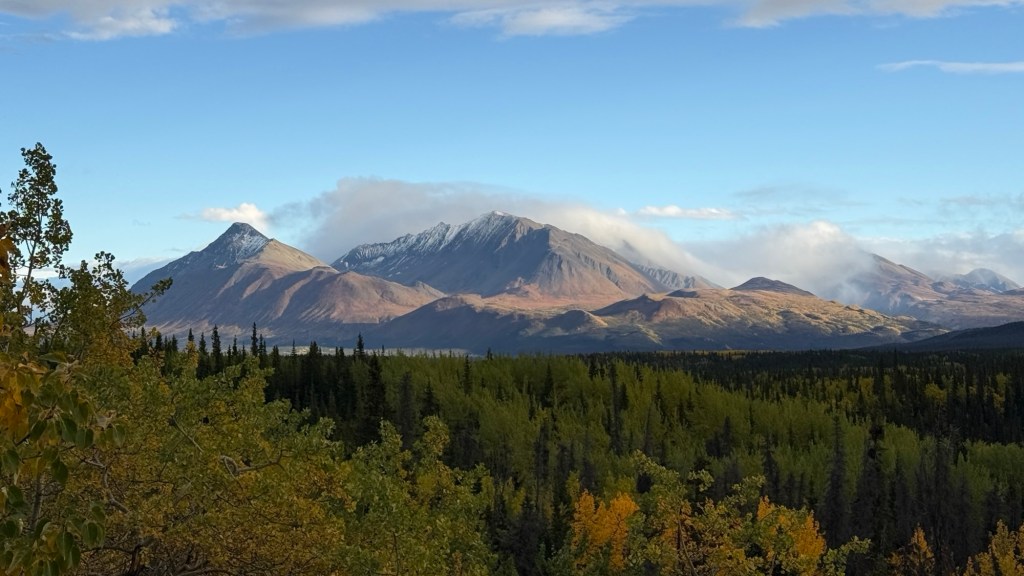
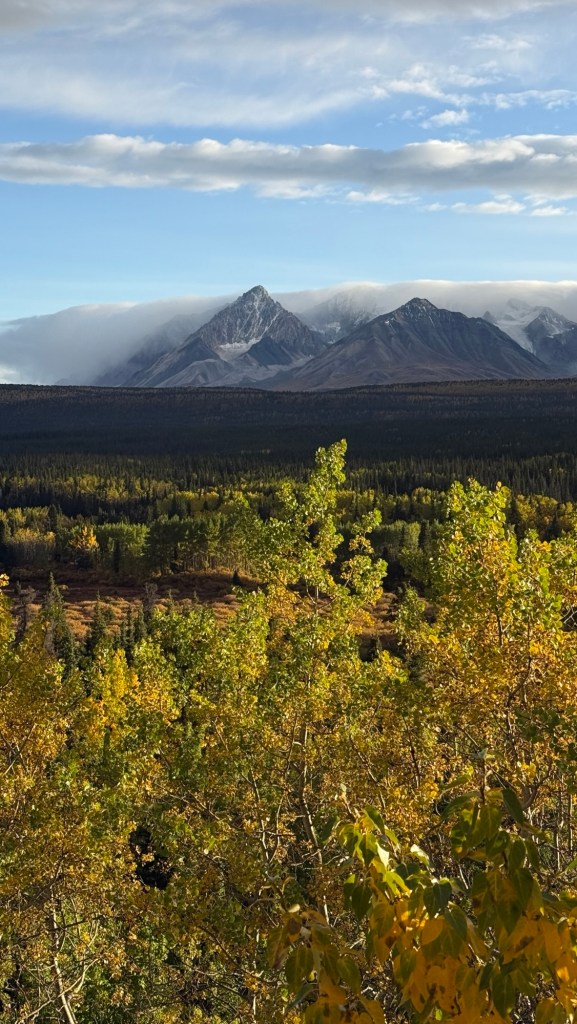
We woke from a great sleep to a bit of rain. I brought out my long sleeves and layers again!
We didn’t linger long and headed out back onto the Alaska Highway and continued on our way. The drive was beautiful.
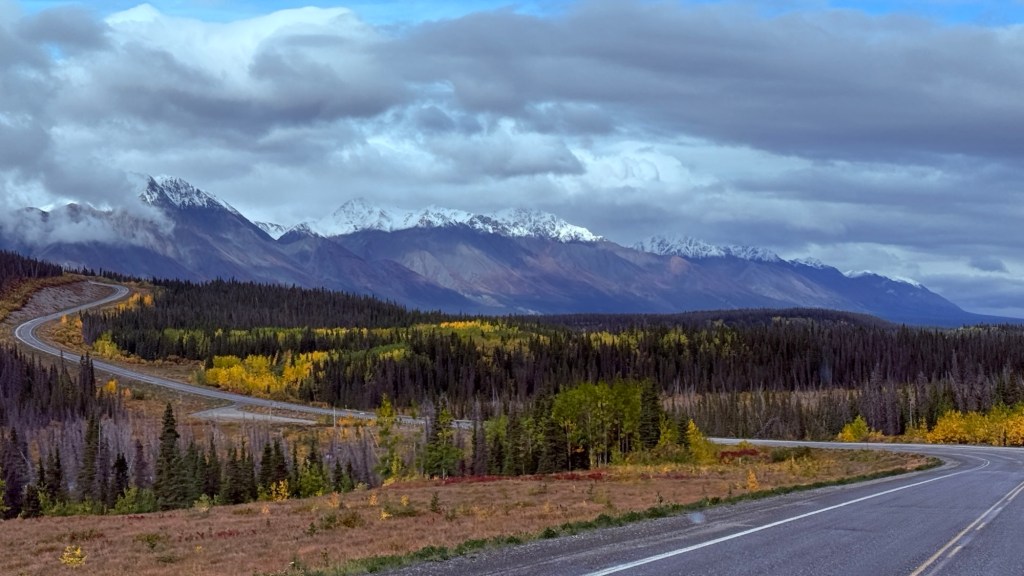
We checked out Silver City. The community began during the 1903–1904 Kluane gold rush after prospector Dawson Charlie staked a claim nearby. It is known as the Yukon’s largest remaining ghost town. Several old wooden log buildings and structures still stand in various states of decay as nature reclaims the site.
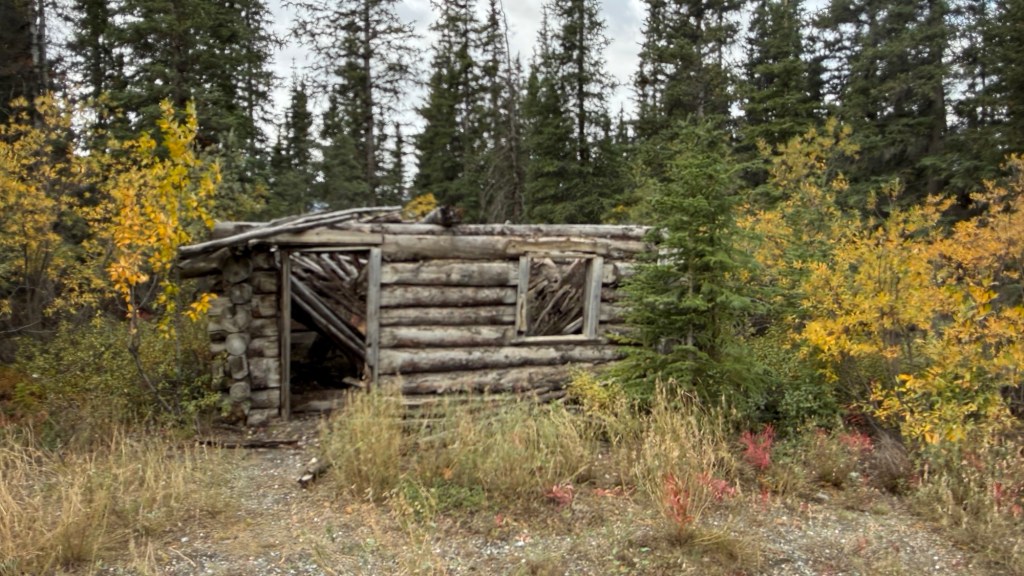
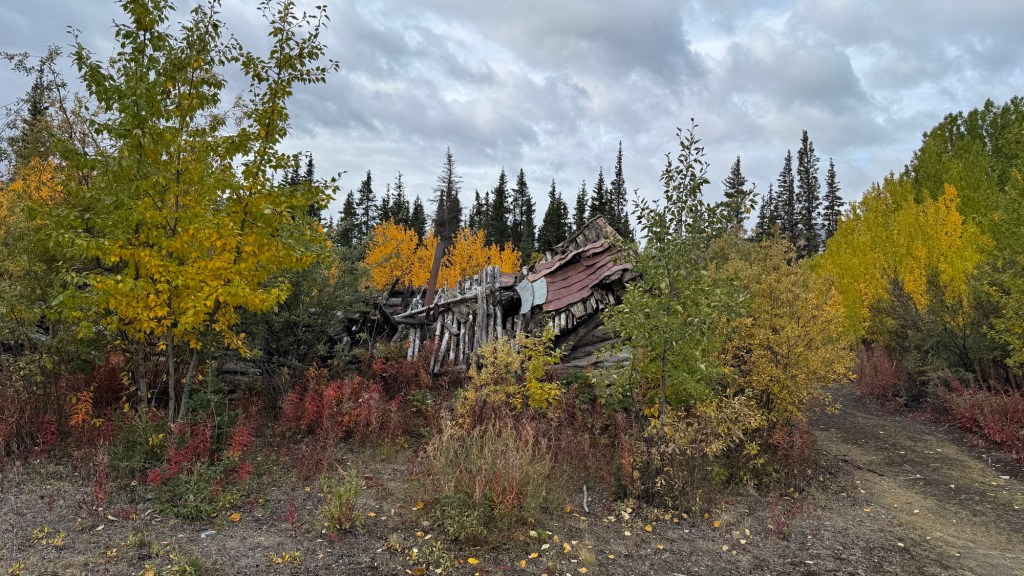
Much of the townsite sits on privately owned land, but there is public access – and they just ask that folks respect the area.
At the end of the road in Silver City, right on Kluane Lake, there is a private residence with about half a dozen little cabins. What a spectacular view.
The area has some residences with some interesting landmarks.
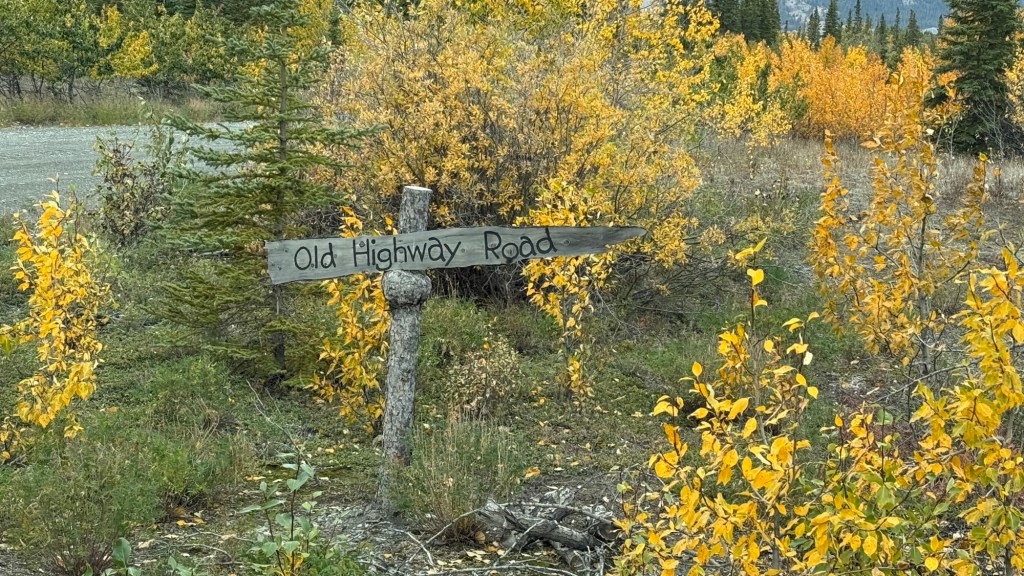
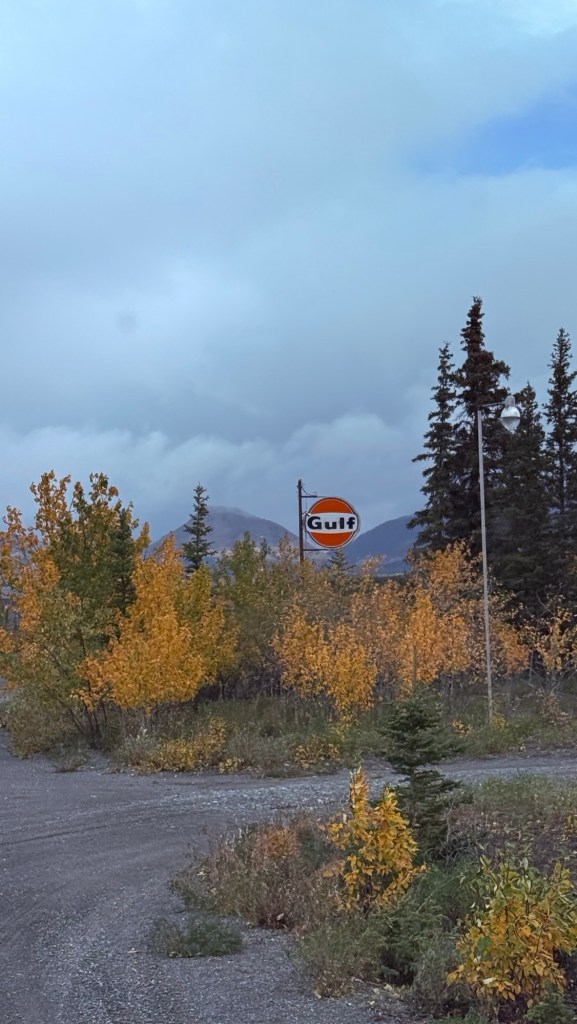
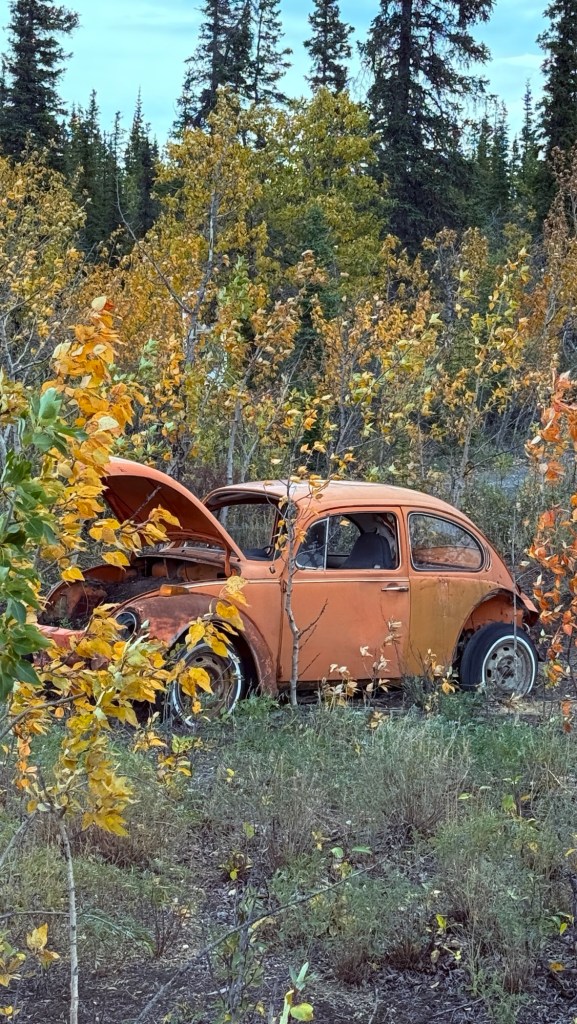
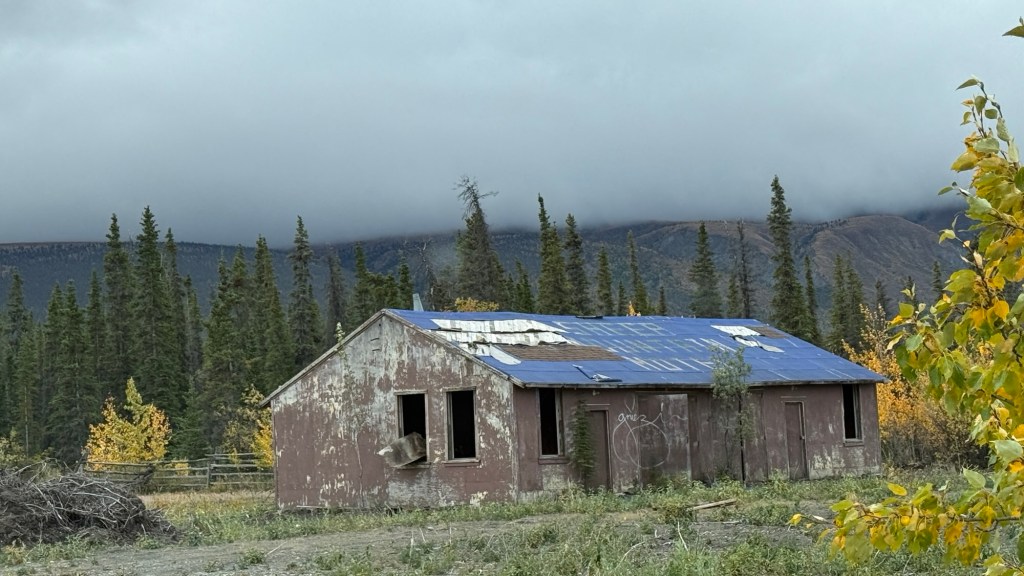
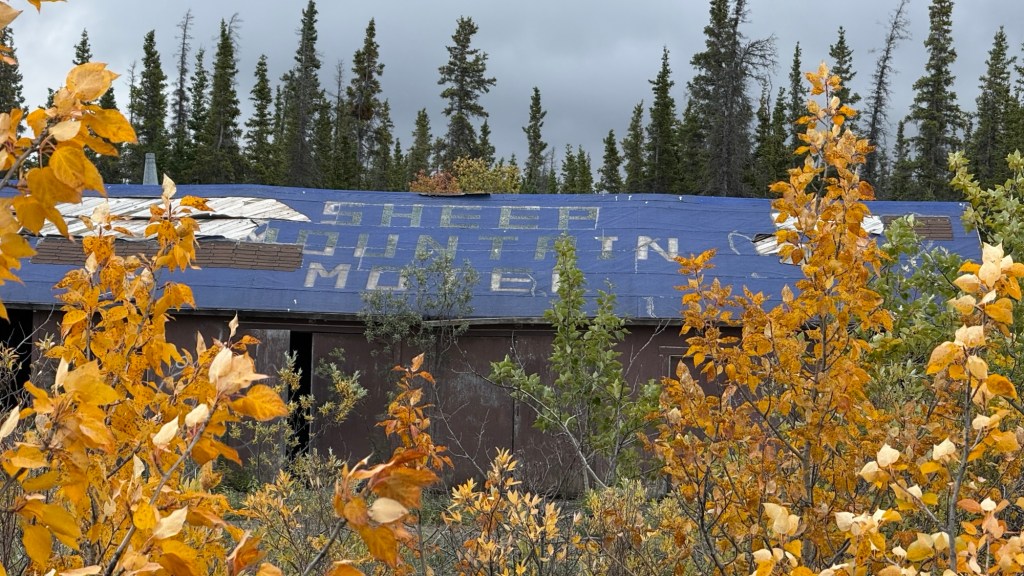
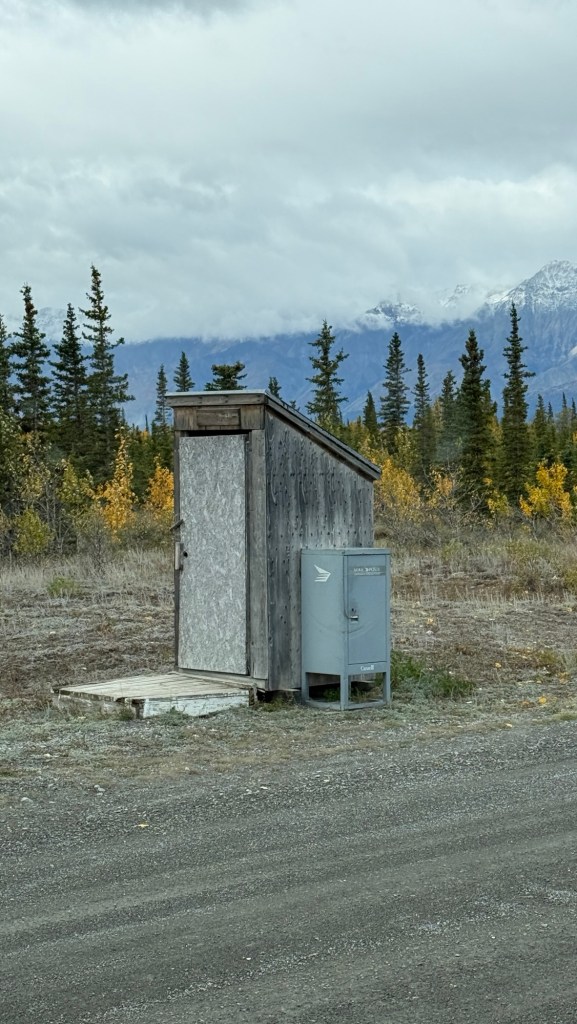
Adjacent to Silver City is an active runway, so we went to check that out. This is just one of countless little airstrips in the Yukon. From this one, there is a company that does glacier tours. Not today though. The weather had taken a bit of a turn, so there wasn’t much of a concern for anyone being on the airstrip.
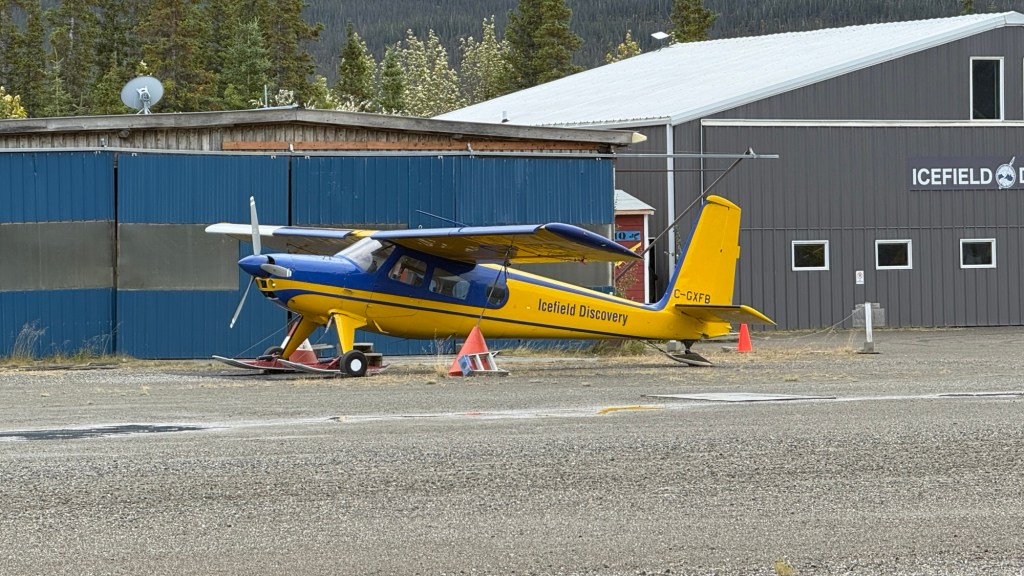
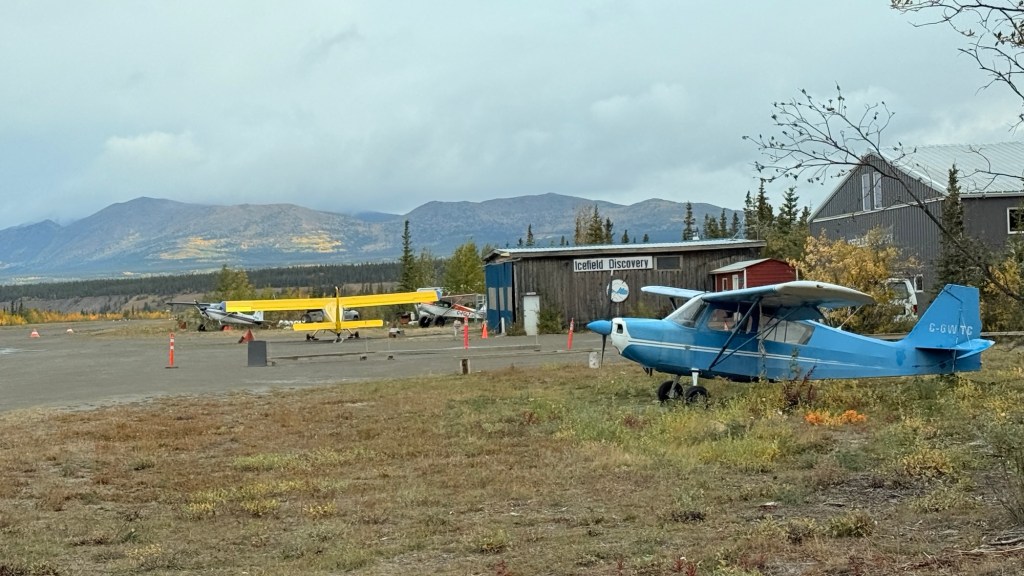
Also on the property is the Kluane Lake Research Station. It is considered a world-class “open-air laboratory” because it sits at the crossroads of several extreme and rare geographic features. It is considered Canada’s Greatest Elevation Gradient.
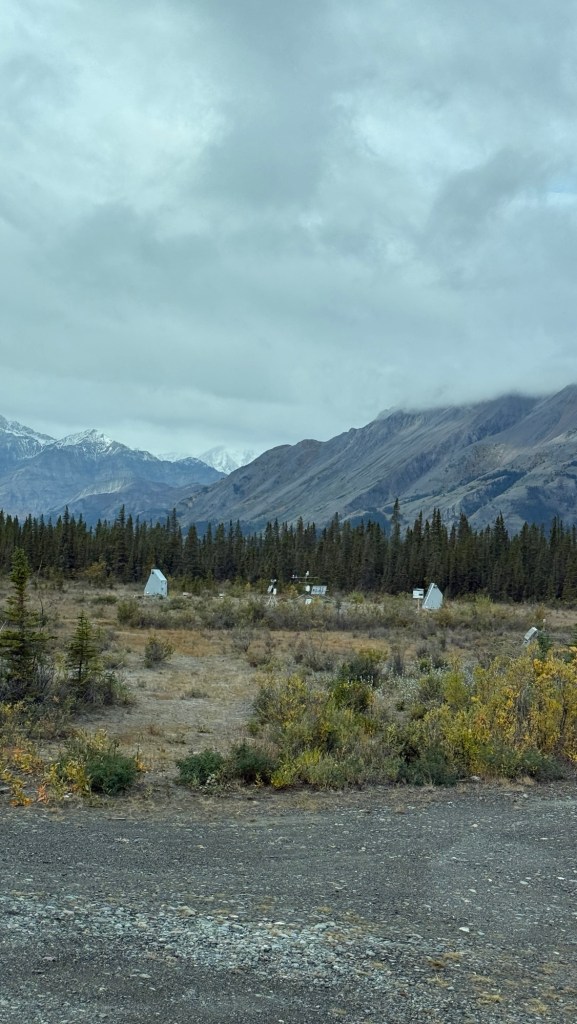
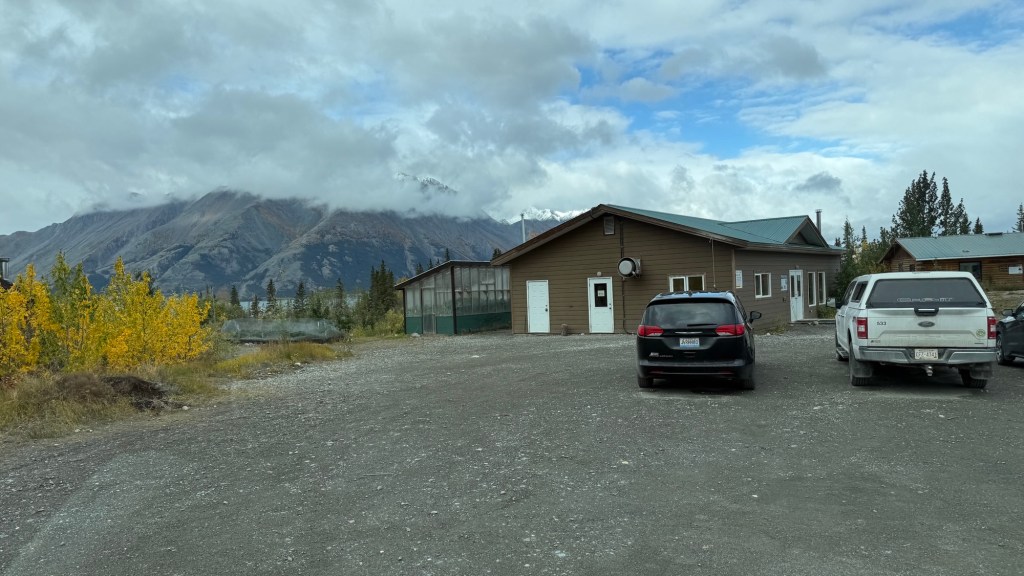
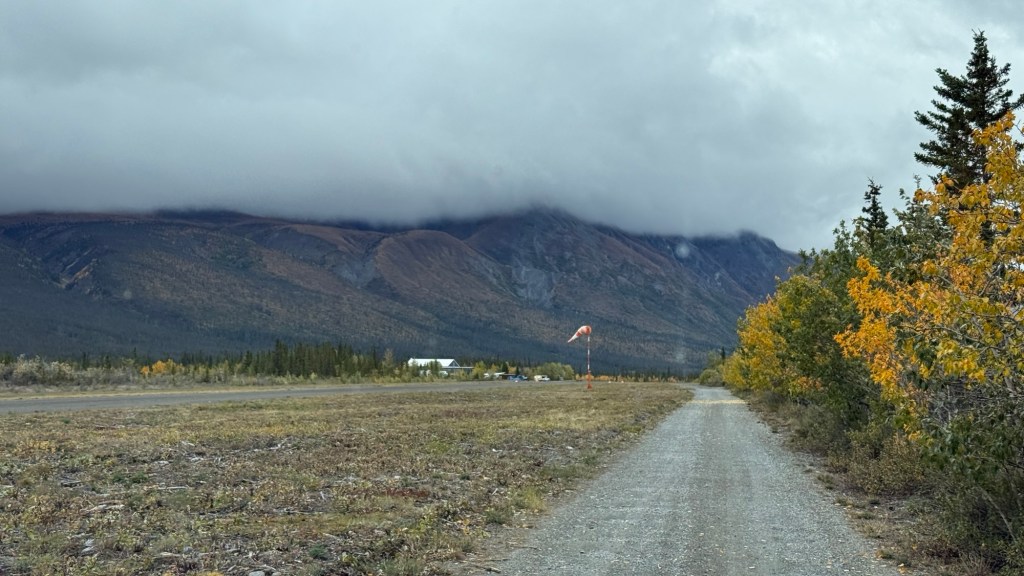
The station sits at lake level (about 800 metres above sea level) right next to the St. Elias Mountains, which crest at nearly 6,000 metres at the summit of Mount Logan. This massive, abrupt change in height packs multiple distinct ecosystems into a very tight geographic area. Within just a 30-kilometre radius, researchers can easily travel through and study boreal forests, alpine tundra, and massive ice fields.
They have cabins there, where a host of groups come to stay. It’s fairly unassuming – you wouldn’t know it was a world class facility, yet they apparently get upwards of 500 people that come through there each season.
We carried on to Destruction Bay. That’s quite a dramatic name!
Destruction Bay is a small, scenic community located along the shore of Kluane Lake on the Alaska Highway. Kluane Lake is massive. It is the largest lake contained entirely within Yukon with an area of approximately 408 km2, and a length of 81 km.
Established as a military construction and maintenance camp in 1942–1943, the settlement earned its dramatic name after a severe windstorm tore through and destroyed many of the newly erected camp structures.
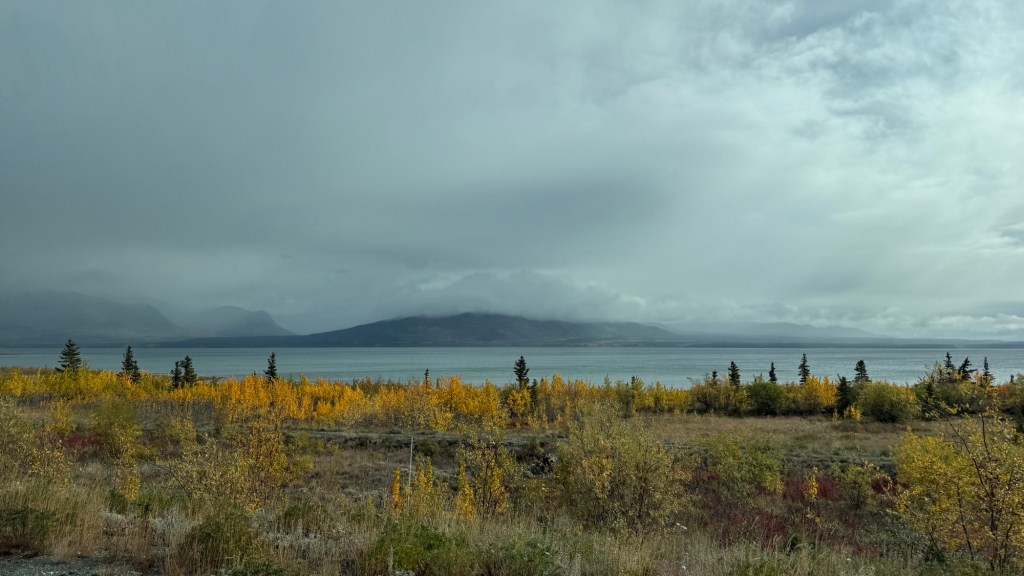
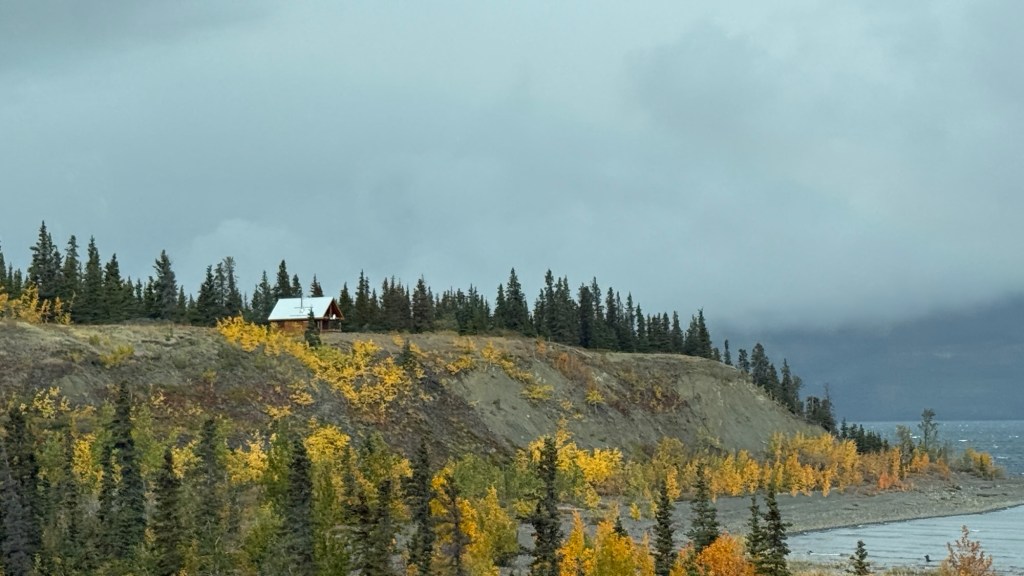
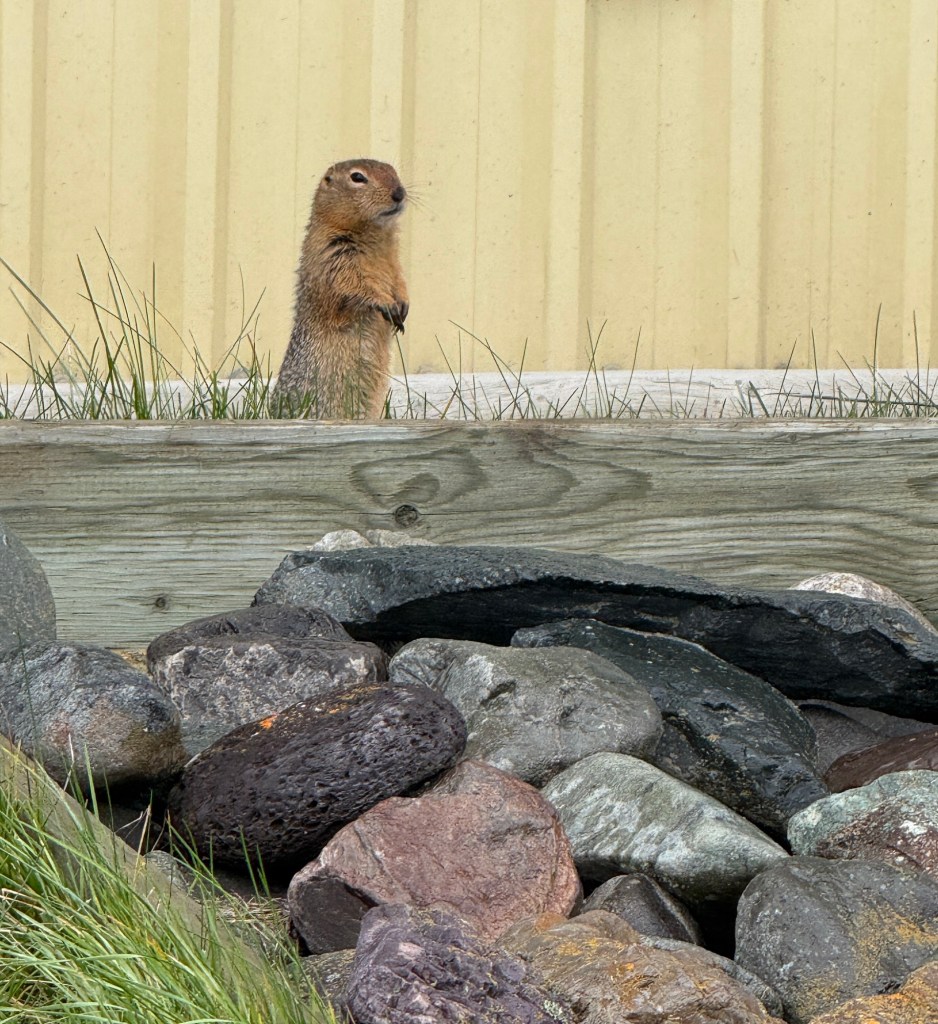
We are definitly in the ‘off season’ now. We stopped by the restaurant – which is a good size, and typically quite busy , but not today. We will often stop, grab some food and enjoy it in the cabin. Our clubhouse was great and this little guy was checking me out with my food as I made my way back to the cabin.
Back on the road, it felt like it was time to find a place to rest for the night. Eric found us another fantastic spot on a little unnamed lake near the Donjek River.
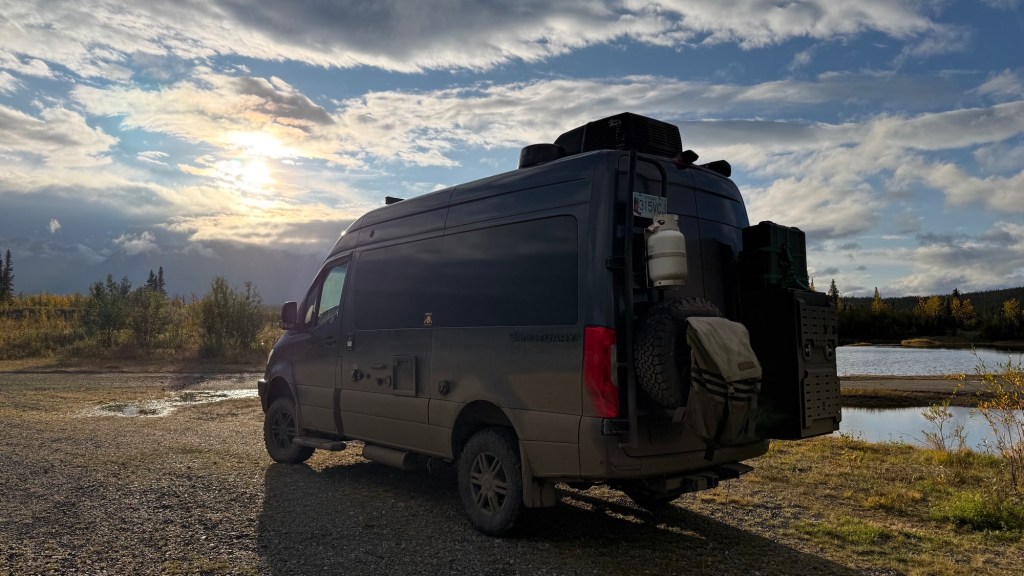
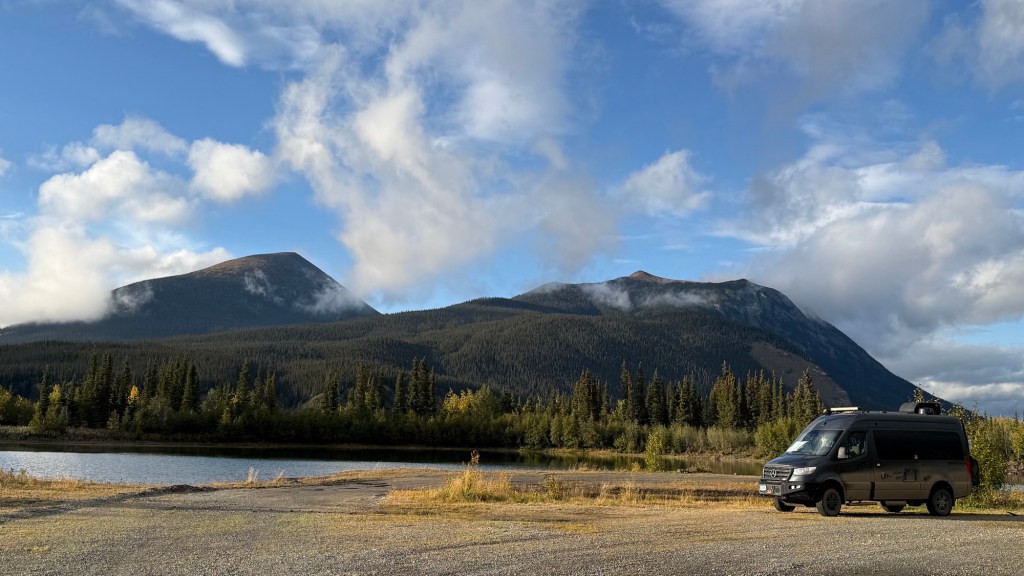
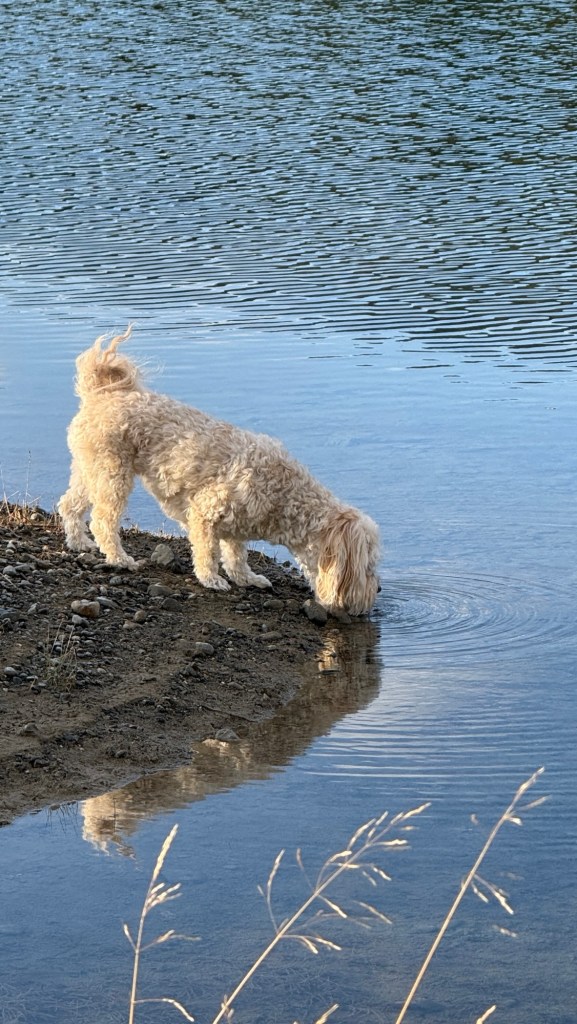
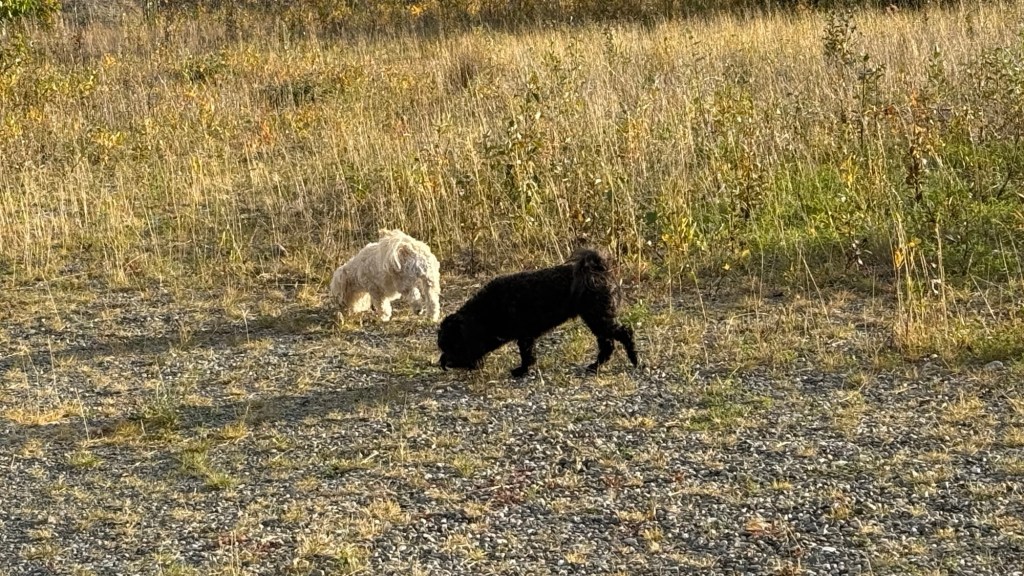
The sun peeked out after dinner and we took the dogs for a little walk. It’s a lovely spot, and we’re sure to have a good rest. There’s significant cloud cover so it’s not likely that we’ll see aurora borialis. But I’m still hopeful for a full show sometime this week!


Leave a Reply