
Yes, that’s me losing track of the days.
We’re so grateful to be taking this time to slowly reintegrate ourselves back into the reality of day-to-day life. We’ve taken slow days and extra night stays in lovely places we’ve found along the way.
We still have a few days to go.
I was hopeful the last time I posted that we’d get to see some Northern Lights – but we didn’t.
We continued our way southeast, travelling through the Toad River area, Fort Nelson, then through the Donnie Creek Wildfire area (of 2023). That fire broke the record for the largest wildfire in British Columbia’s history by area burned – it still holds that record.
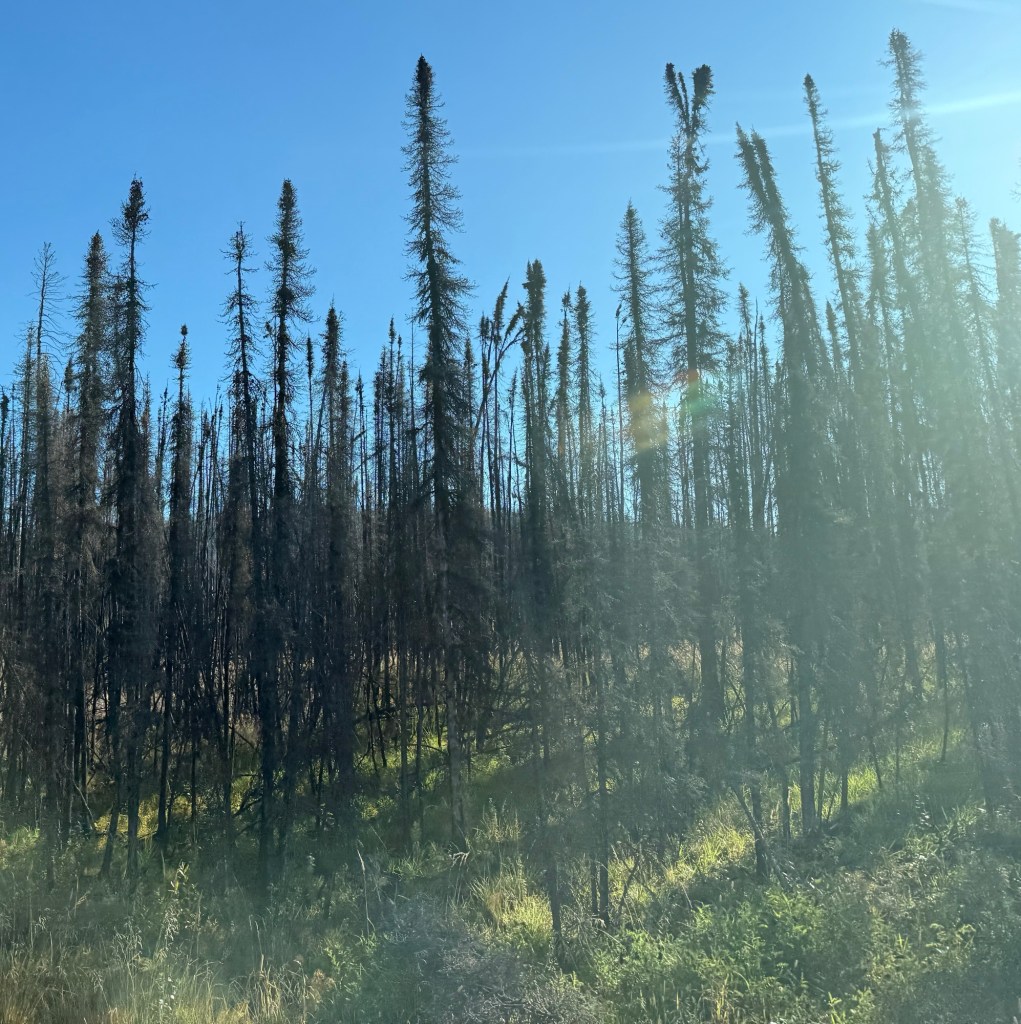
It’s such a strange feeling as you travel through an area that is nothing but black remnants of trees. Given the fact that the fire reached a final size of 619,072.5 hectares (approximately 6,190.7 square kilometers) or 1,529.761 acres… we drove for a long time along the burnt forest.
We stopped at Pink Mountain and stayed in a clearing that hadn’t been directly affected by fire. This was where we stayed for the night.
You know what else?
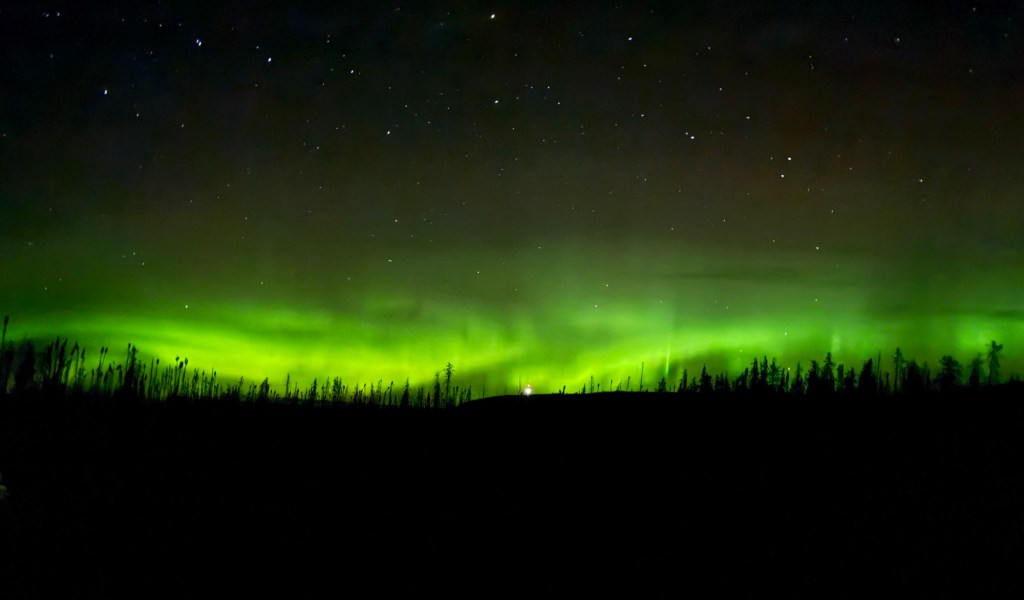
The next morning was a bit of a slow one, given we were up late to enjoy the Northern Lights dance about.
Right off the mark, we were blessed to see this beautiful Mama.
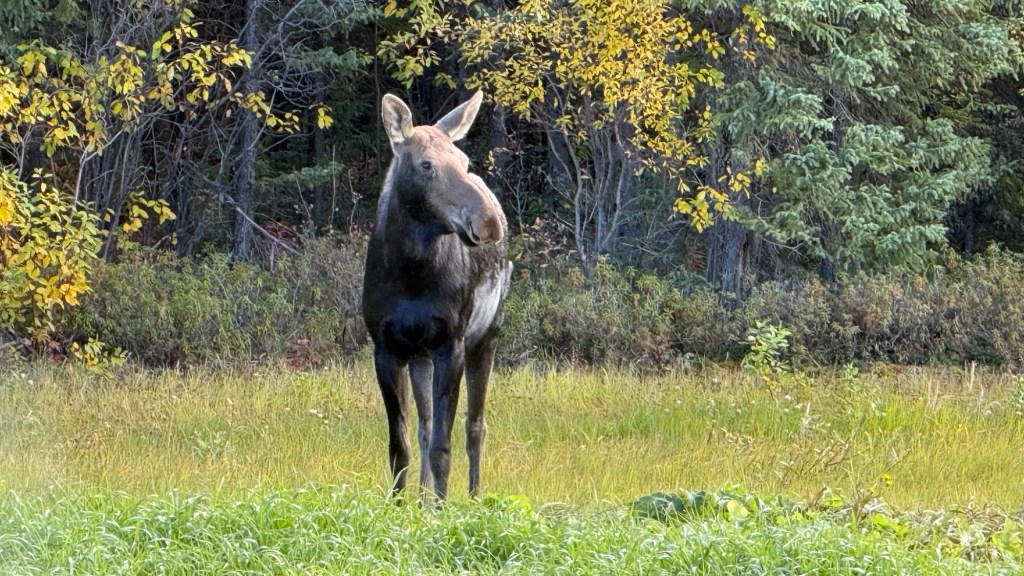
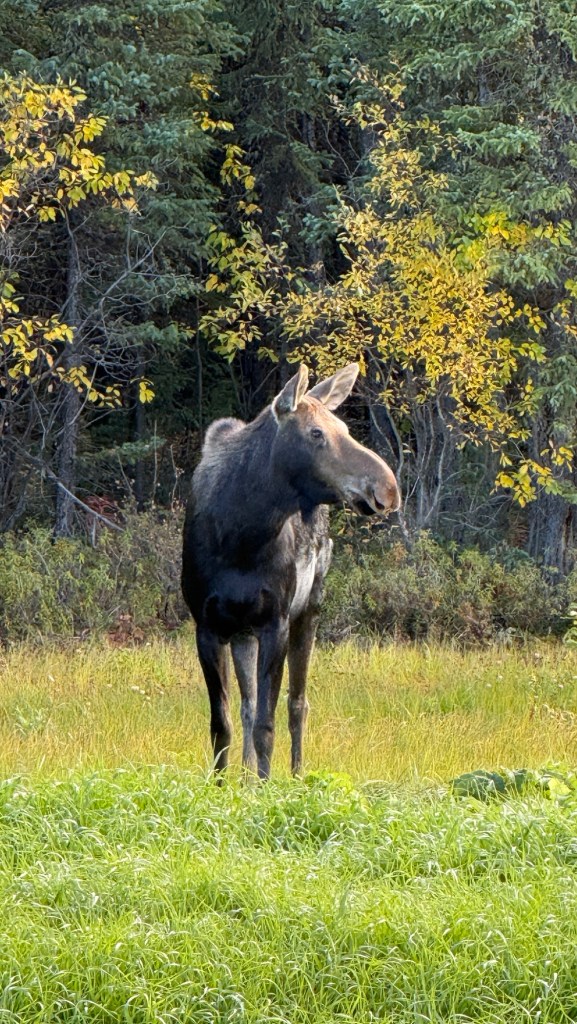
We hadn’t seen any Moose yet, so this was a real treat.
We made it to Fort St John and did a few errands before continuing on our journey. We stayed at campsite south of town along the Peace River.
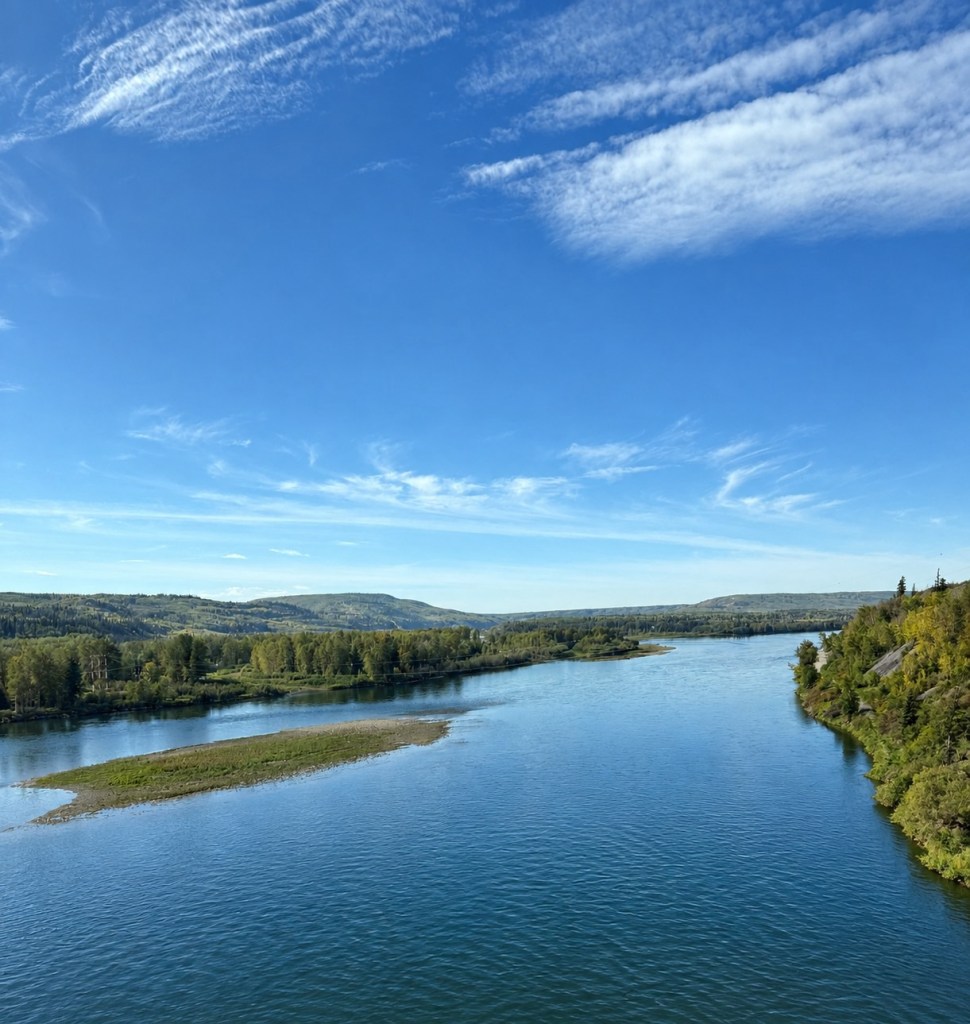
This photo was taken from the bridge that is not too far from the campsite. The noise from the bridge resembles what massive data centers sound like. *cringe*
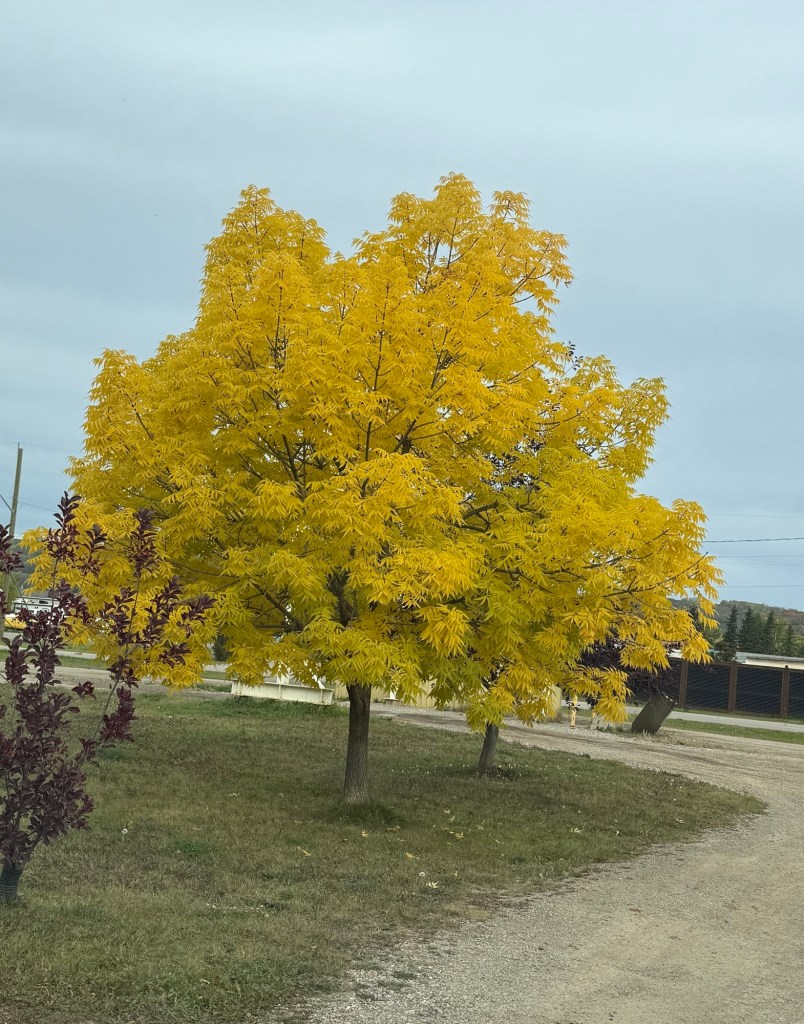
Onto Taylor, where we topped up our supplies, we’re noticing the colours changing once again.
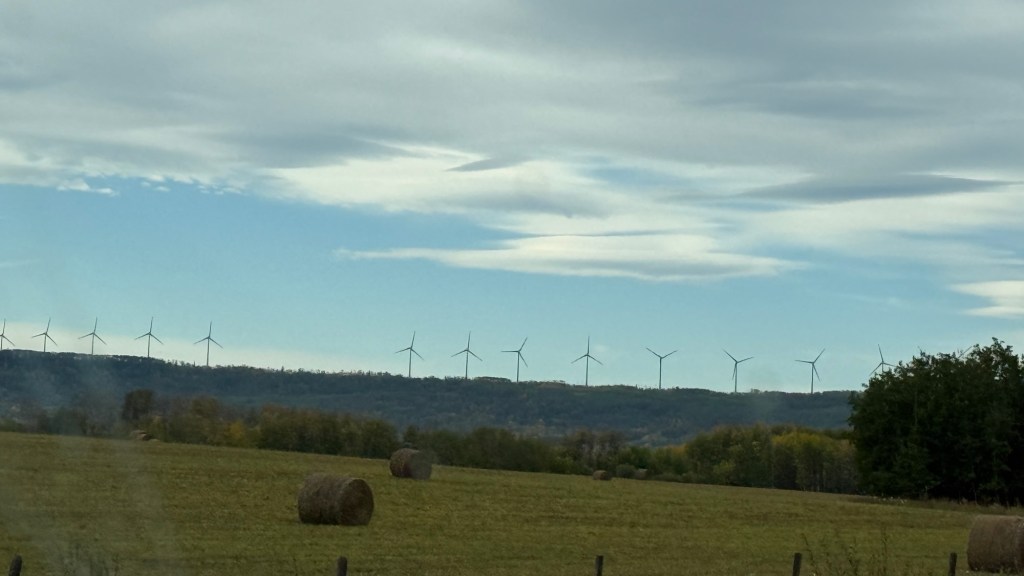
We saw this wind farm from a distance, which I am always in awe of seeing.
We went to Dawson Creek, got some treats from a local bakery, and headed on towards Chetwynd.
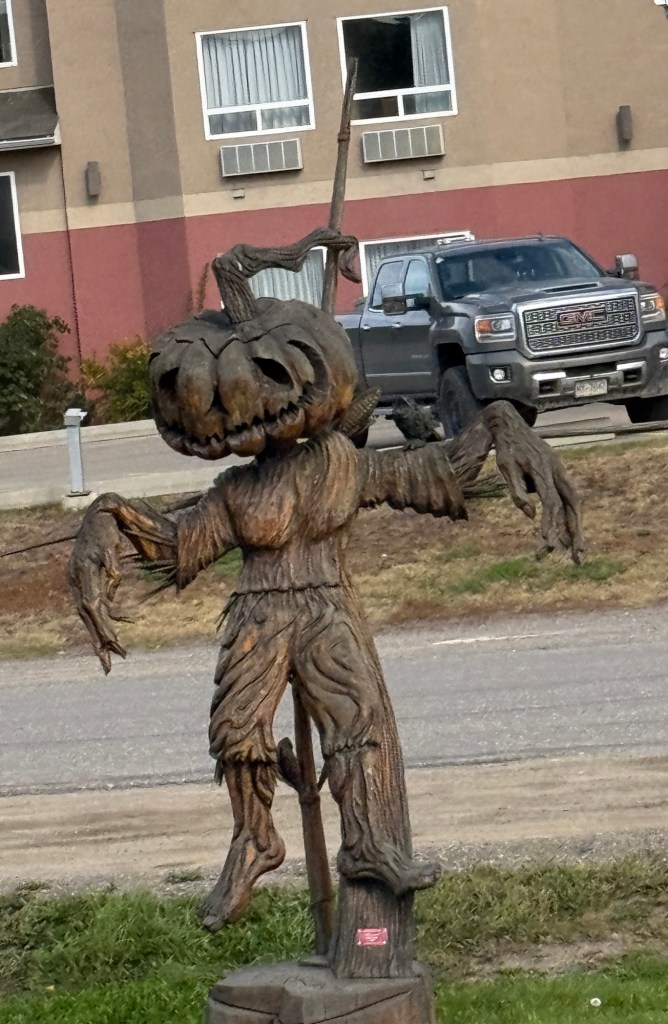
Chetwynd is somewhere we’d like to go back and spend a bit of time. Along the highway, they have all of these life-size (and bigger) carvings. Chetwynd is known as the world capital of chainsaw carvings.
The town hosts the Chetwynd International Chainsaw Carving Championship every June. Each sculpture is carved from a massive western red cedar log measuring 8 feet tall and 40 to 50 inches in diameter.
Chetwynd has over 200 chainsaw wood carvings spread throughout the town. Here are a few examples.
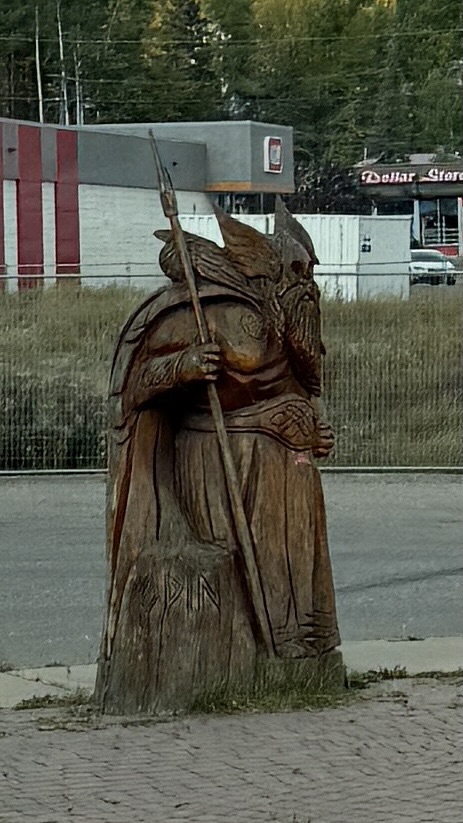
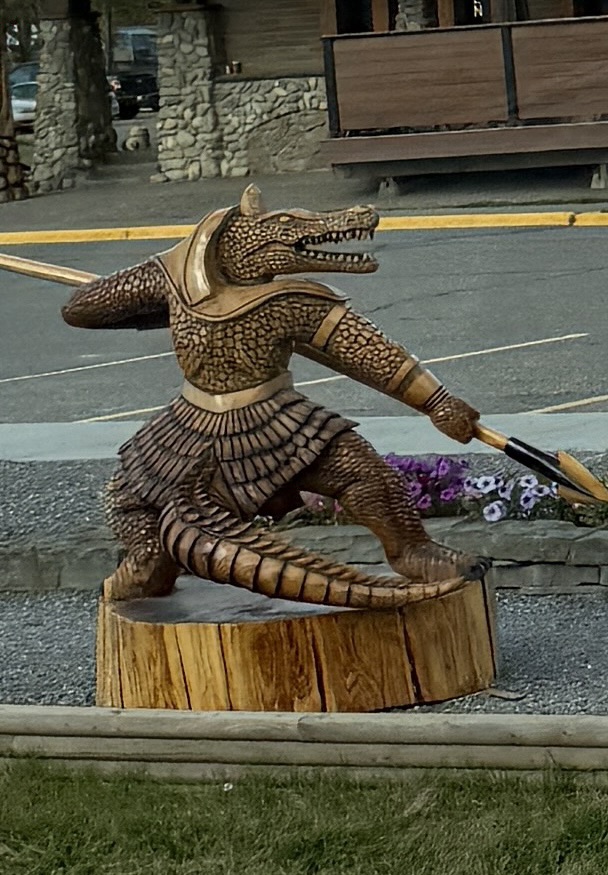
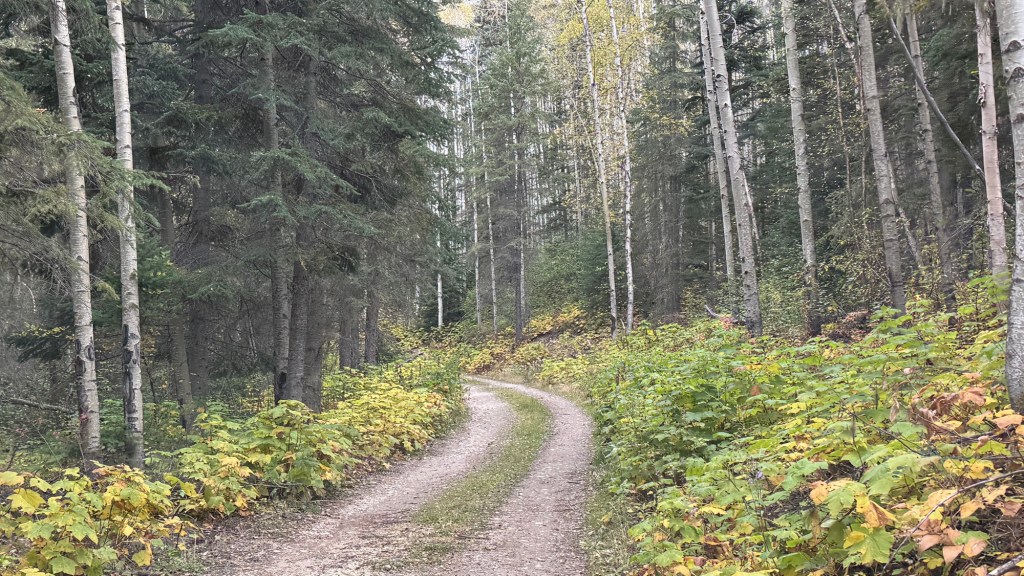
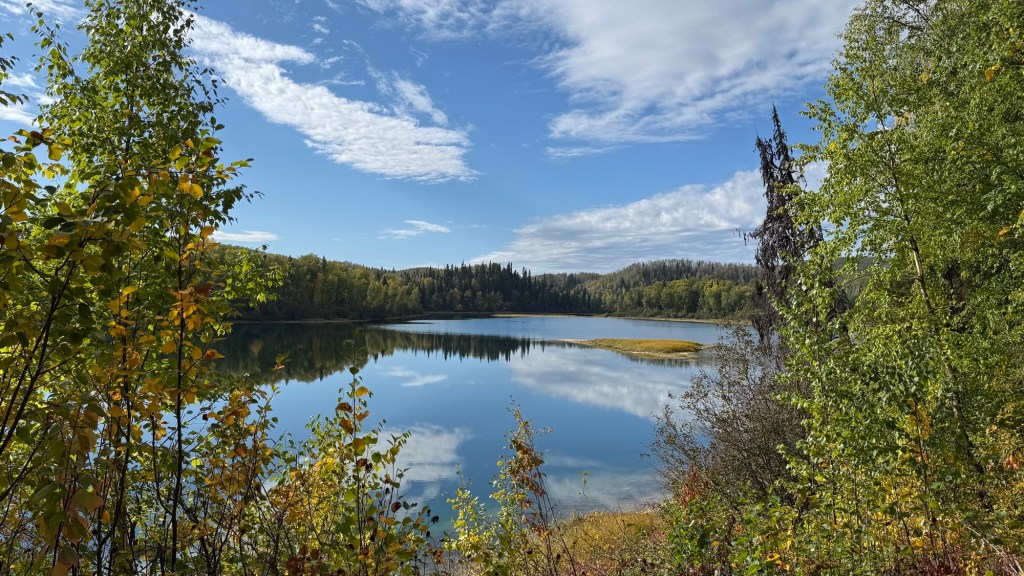
Travelling through Moberly Lake, the scenery is gorgeous.
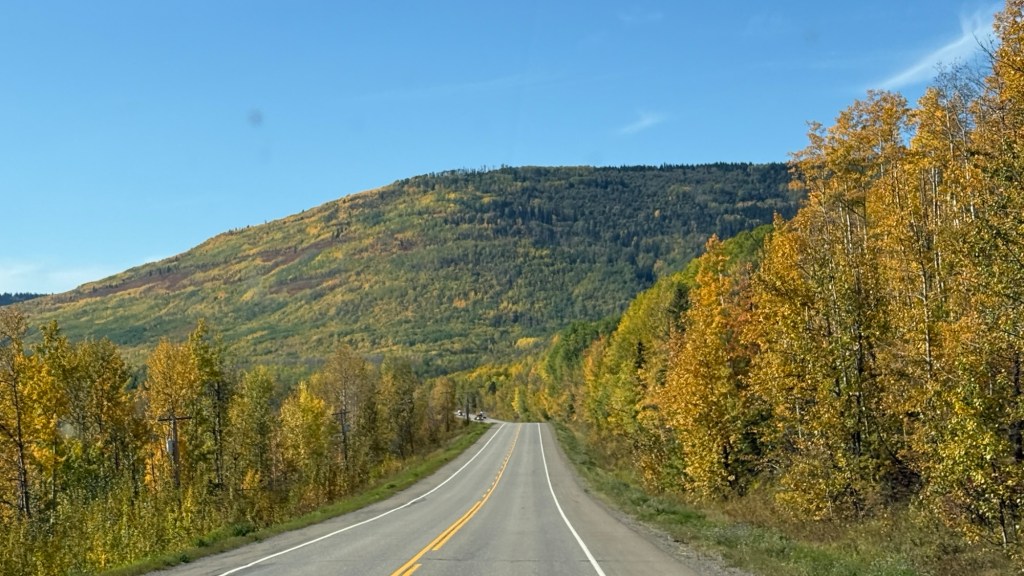
Past McKenzie, Eric found us a place off the beaten path. The Tudyah Lake Provincial Park has an official campsite, but Eric perched us on the very tip at the far end, in a 3 site campground that is a rec site, but you’d really need to know where to find it.
It was so beautiful there; we stayed 2 nights.
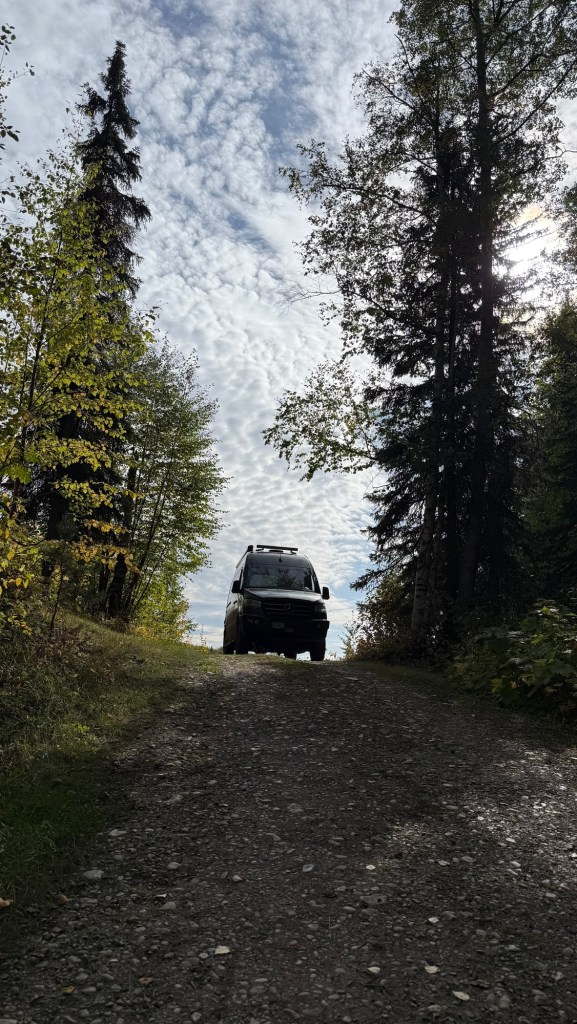
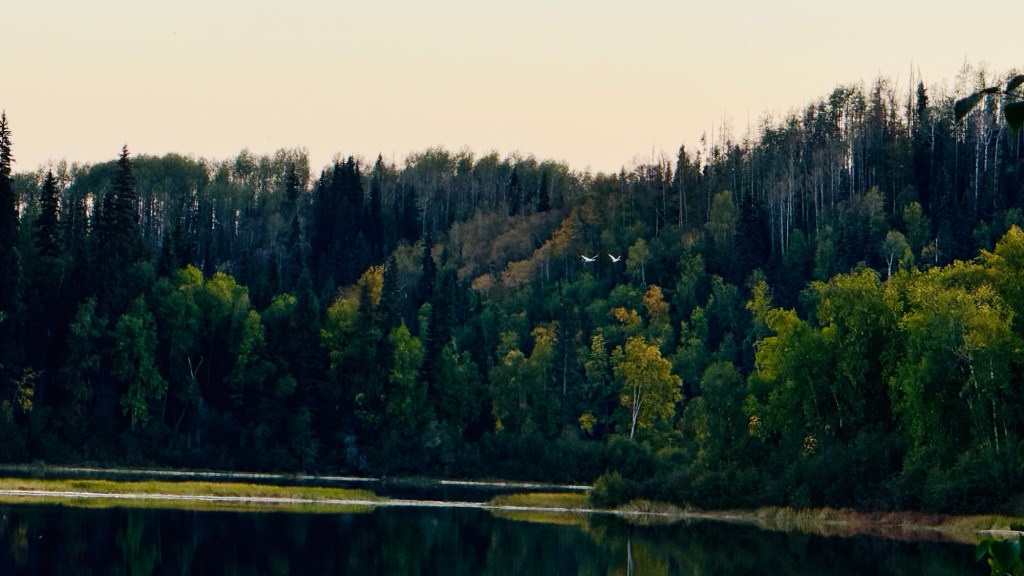
We had the best cabin bedroom view!
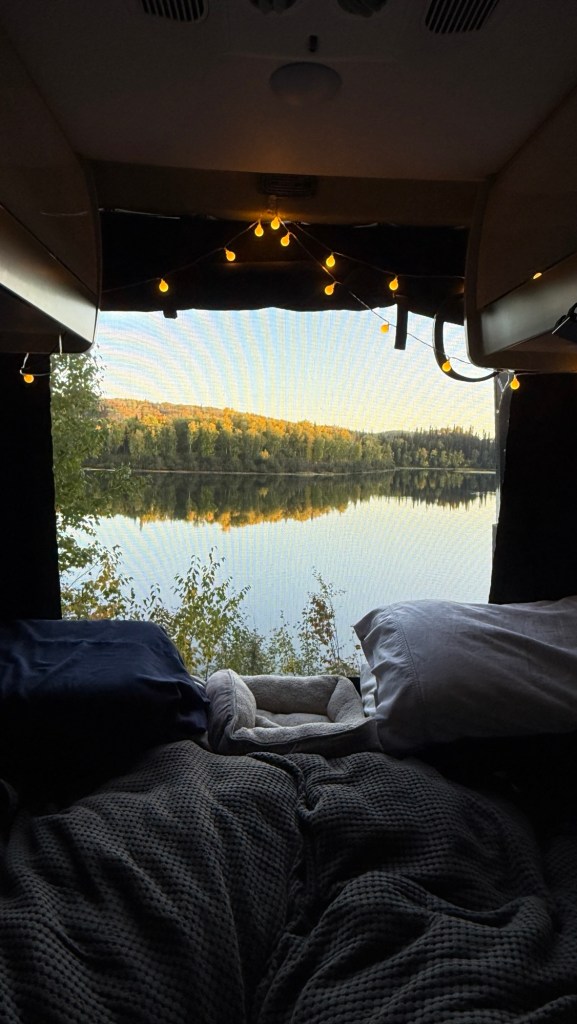
And night time veiws…
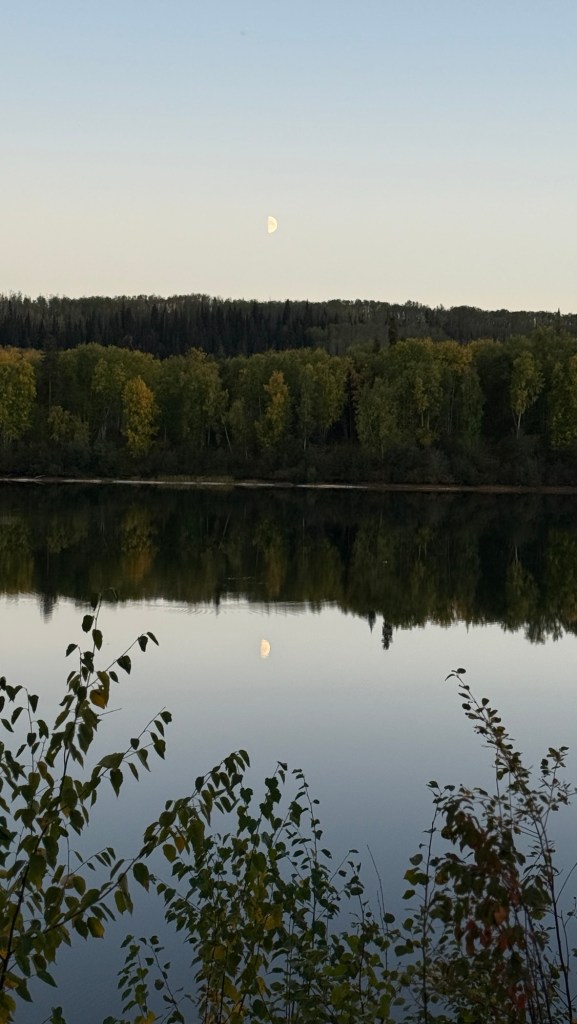
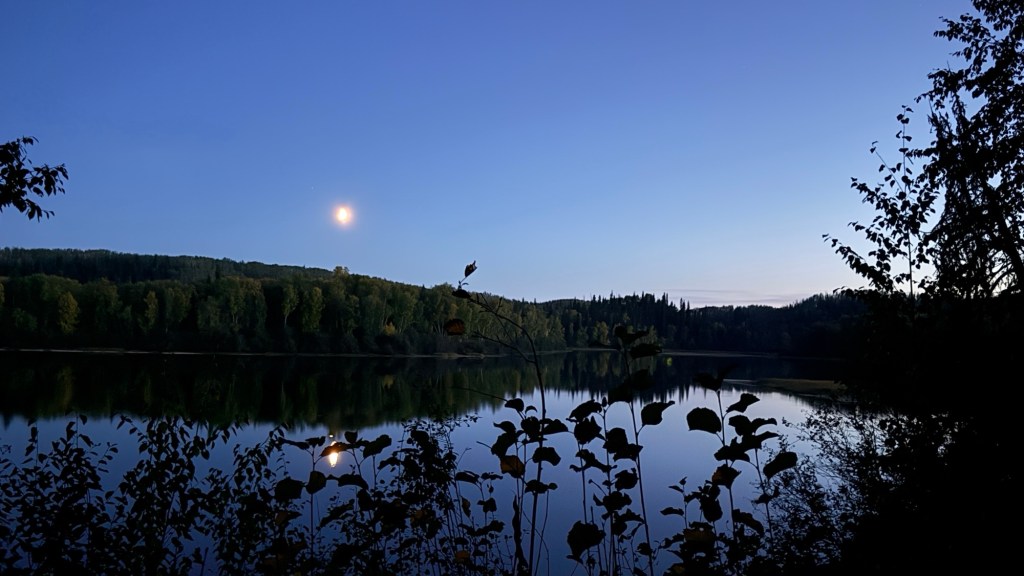
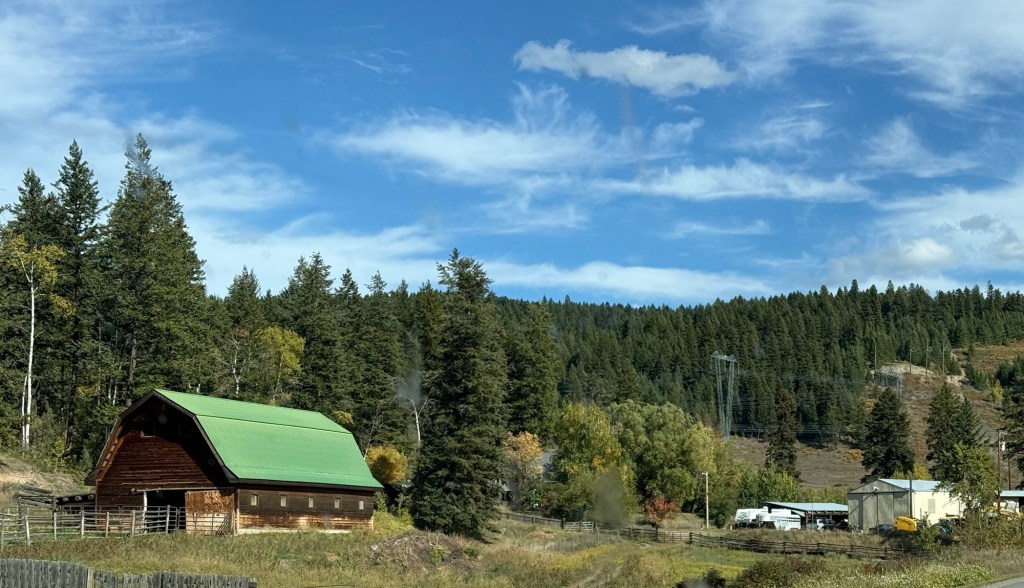
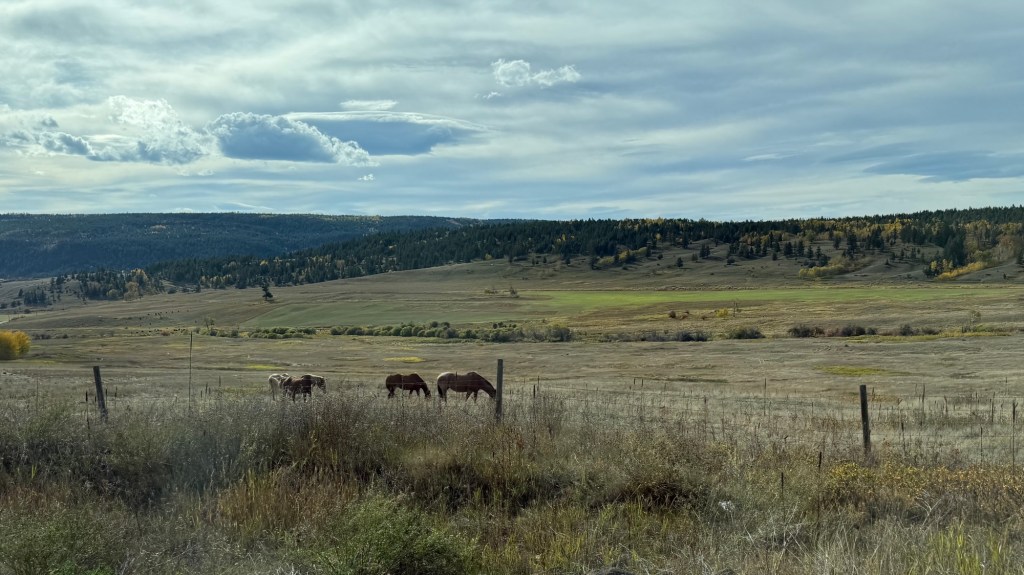
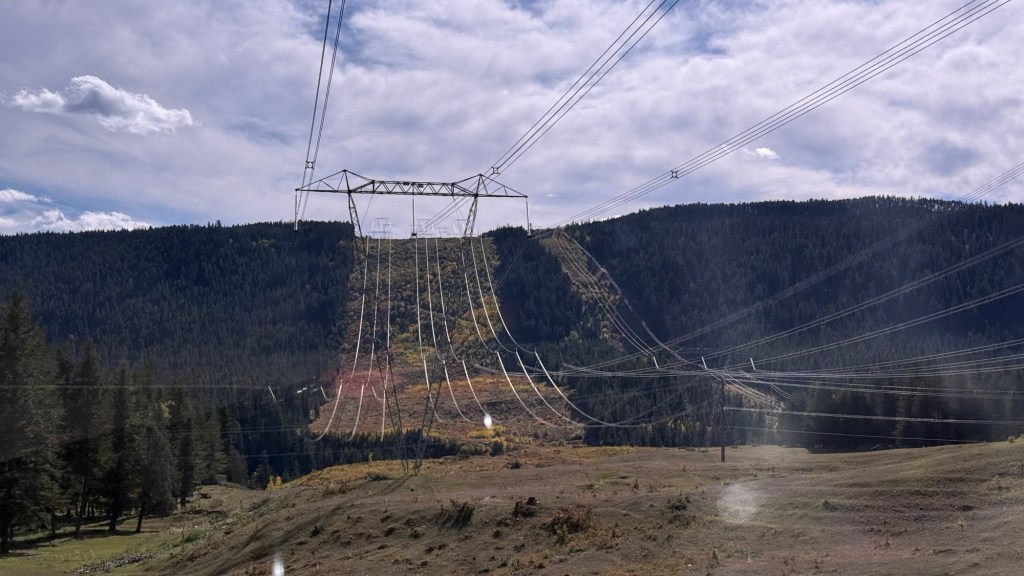
Off we go again – relaxing views, lots of farmland, old homesteads, and BIG power lines.
We stayed just outside Williams Lake for the night.
It was a clearing off a forest service road, we tucked in way back behind a massive wall of cut wood.
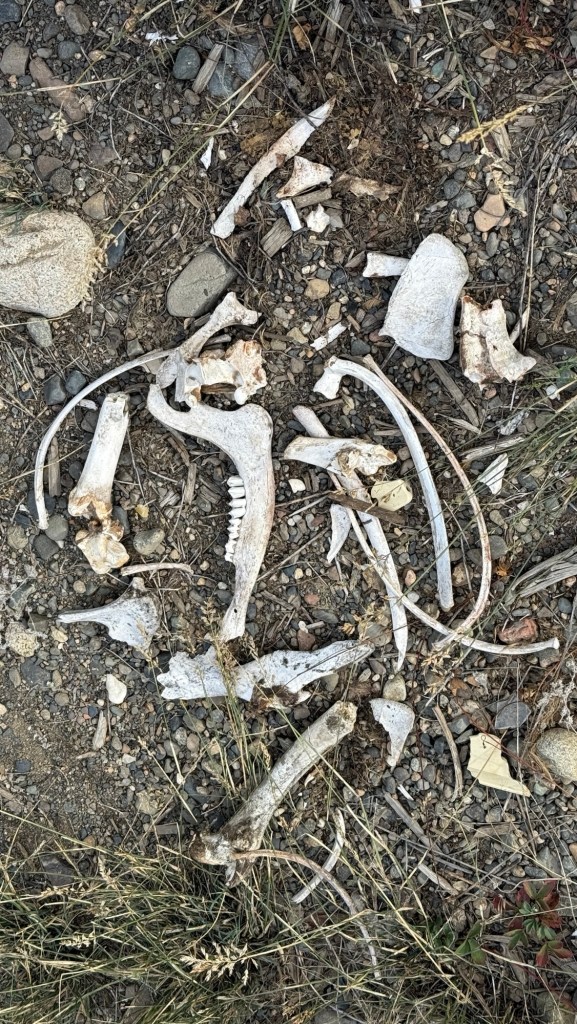
Clearly, the area was a popular spot to target shoot, given all the casings left behind. We (our dogs) also found a neat little pile of bones…
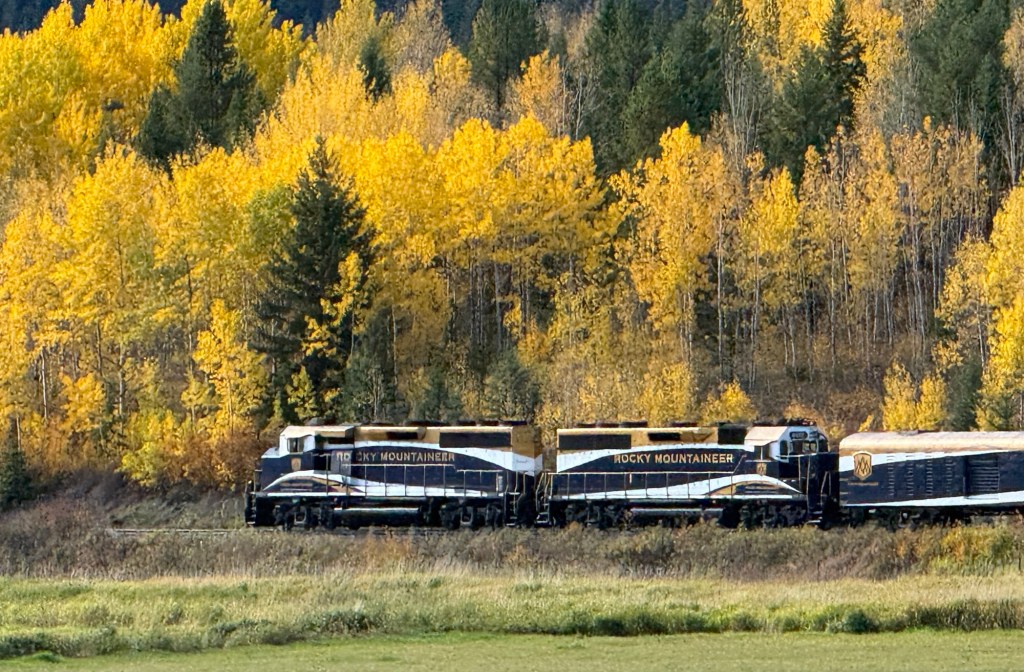
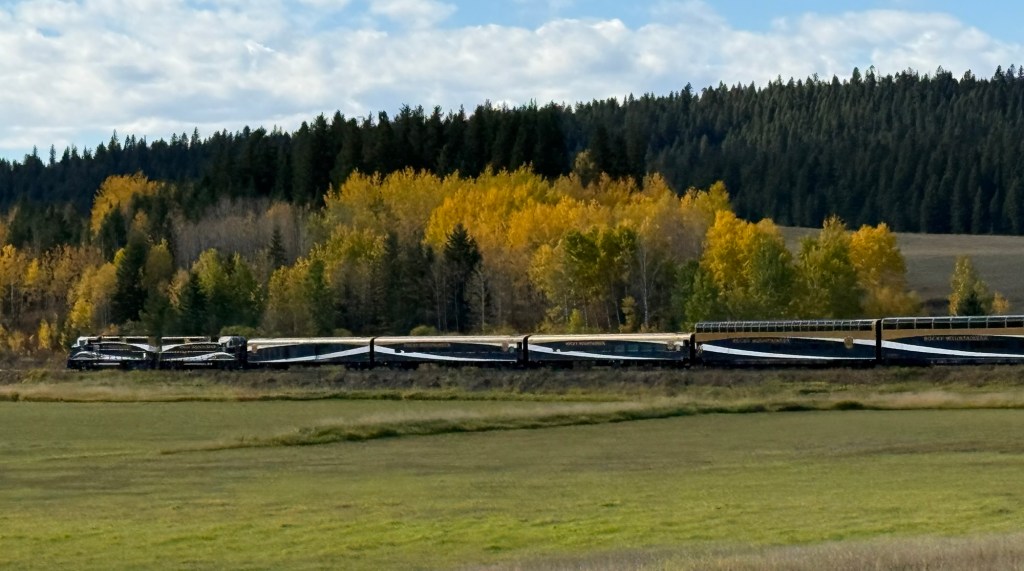
Late the next morning we headed out towards 100 Mile House. Just as we were coming off the Forest Service road, we saw the Rocky Mountaineer Train go by. There were some fellas on the side of the road with cameras and lenses as long as my arm. Eric stopped a moment, and the fellas told him they’d been planning the photos for weeks. They took off like a shot to catch another vantage point for more photos. They weren’t the only ones either -we saw others on the side of the highway taking photos of the train.
We went through Lac La Hache, and Eric stopped at Frank’s Custom Meats and got his stash of beef jerkey.
When you go this way, you MUST stop at the Sugar Shack and have a Poutine. We did. Again.
We then found ourselves at Beaverdam Lake for the night.
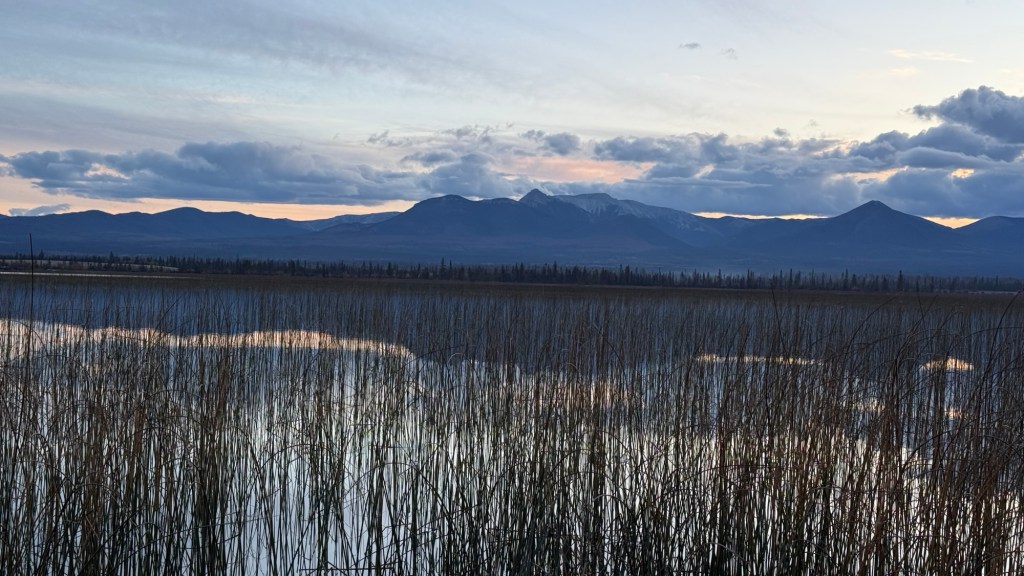
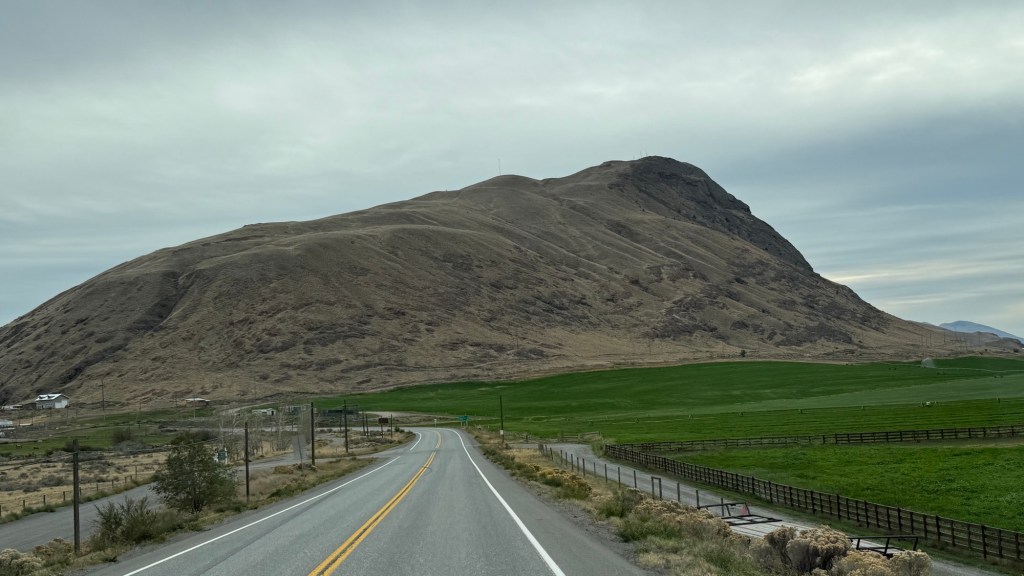
Heading towards Cache Creek, the terrain changed dramatically once again. I can’t believe how the land changes so dramatically.
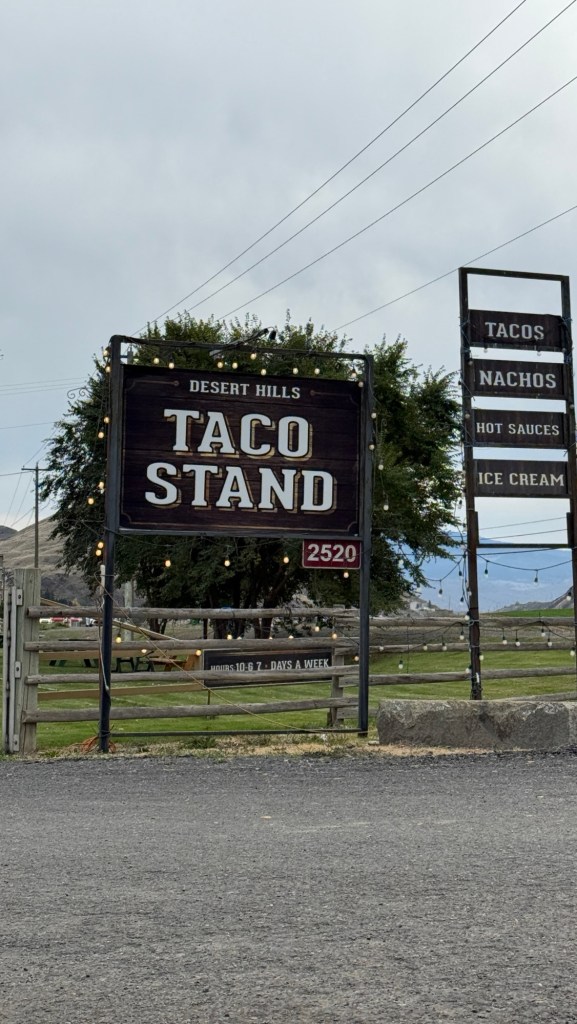
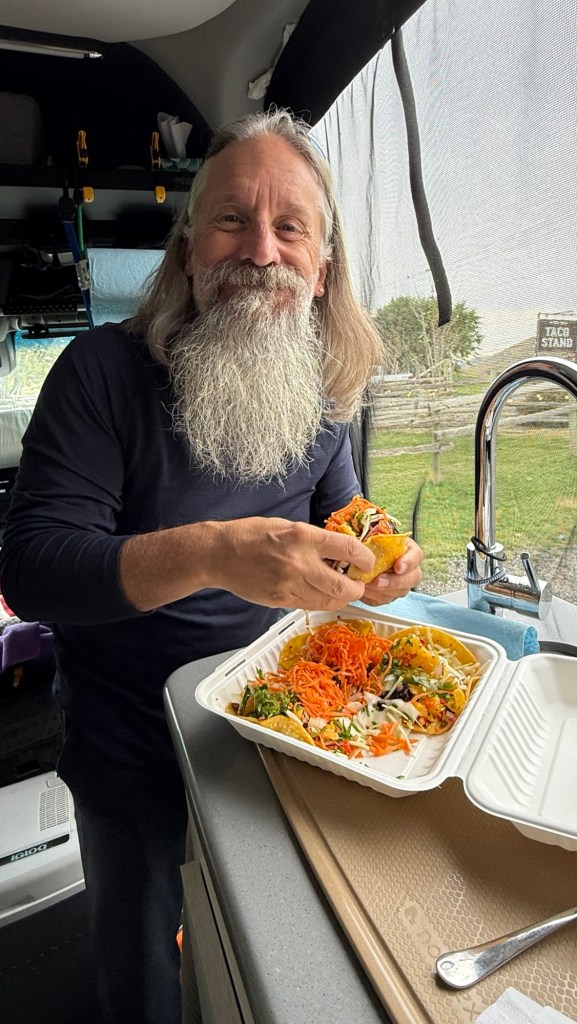
Eric had learned there was a taco place that served up authentic Mexican food. We found it- and it was outrageously good. The building is fairly new, open concept so you can see right into the kitchen. I believe everyone working there is Mexican. Spanish music playing in the back, the staff singing along.
The choices were plenty and the condiments were so incredible, they had to put up a sign ‘this isn’t a smorgasbord- please be reasonable when using condiments’ I can see why- and their salsas were delicious.
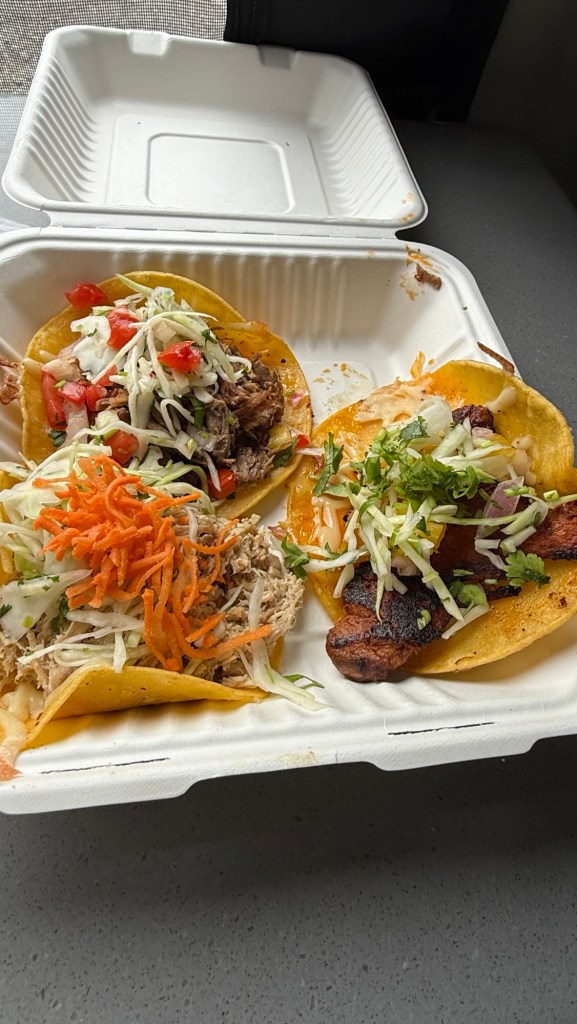
It did not disappoint! The flavours were on point! Truly – we’ve not had anything like this outside of Mexico 🇲🇽
We left Cache Creek and took a little detour through Ashcroft, which we thought was beautiful, then head back out on the highway heading south.
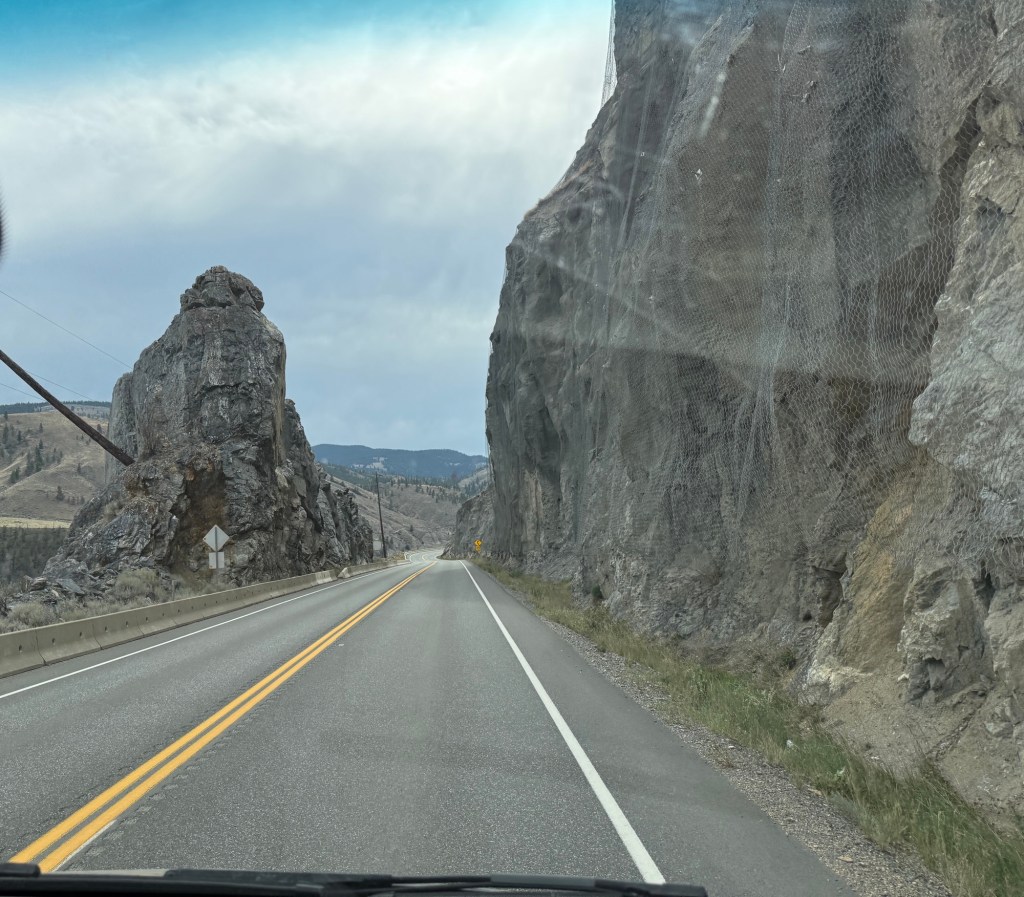
Pretty soon we were on the Numer 1 highway headed towards Hope.
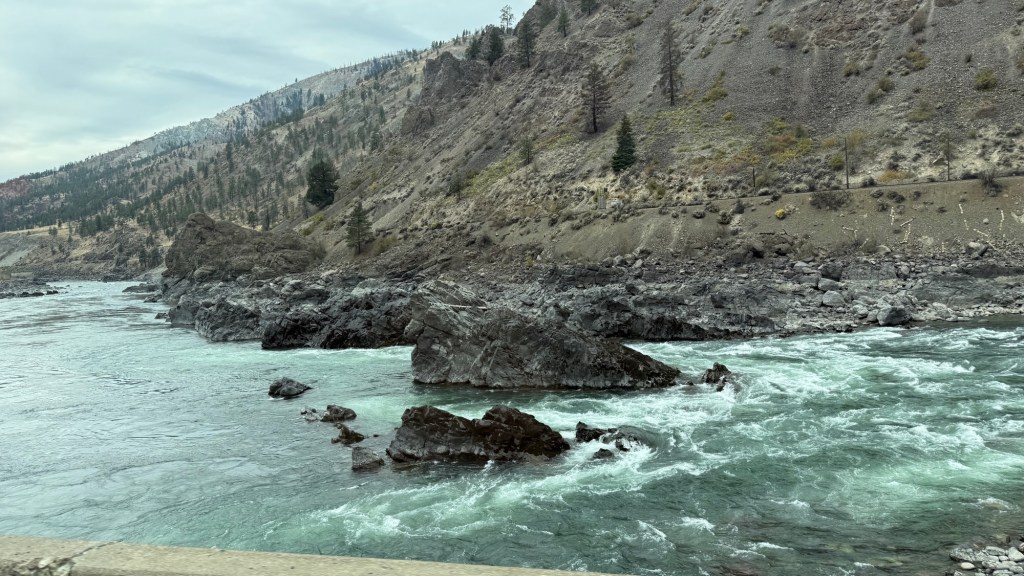
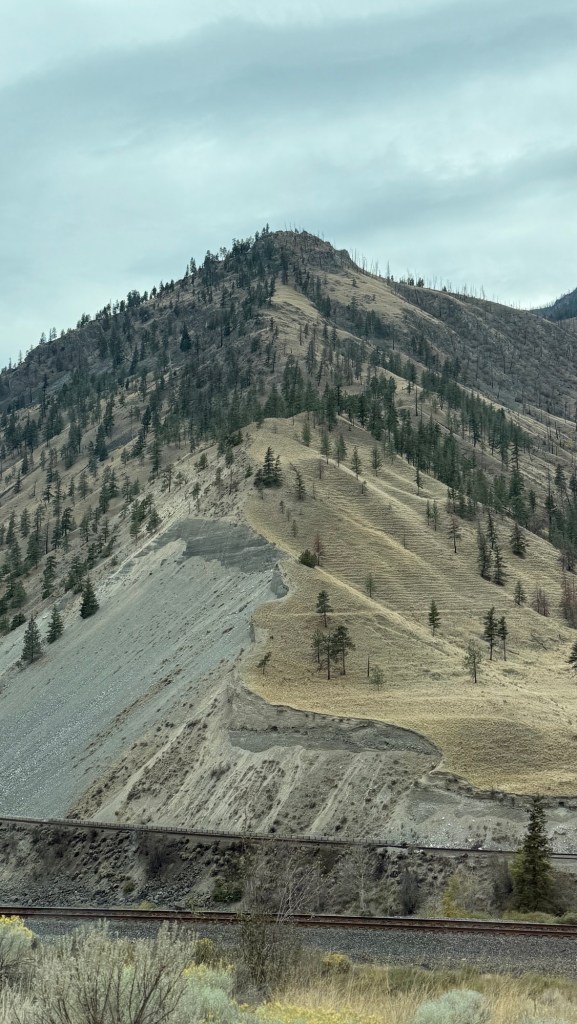
We’d not been though here in a long time. Lytton area still has a great deal of rebuilding going on.
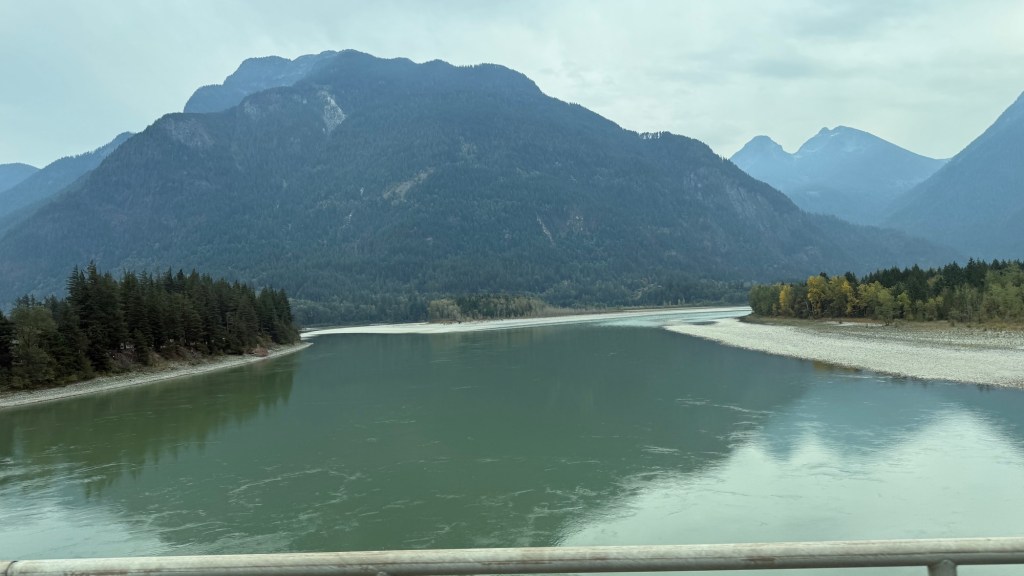
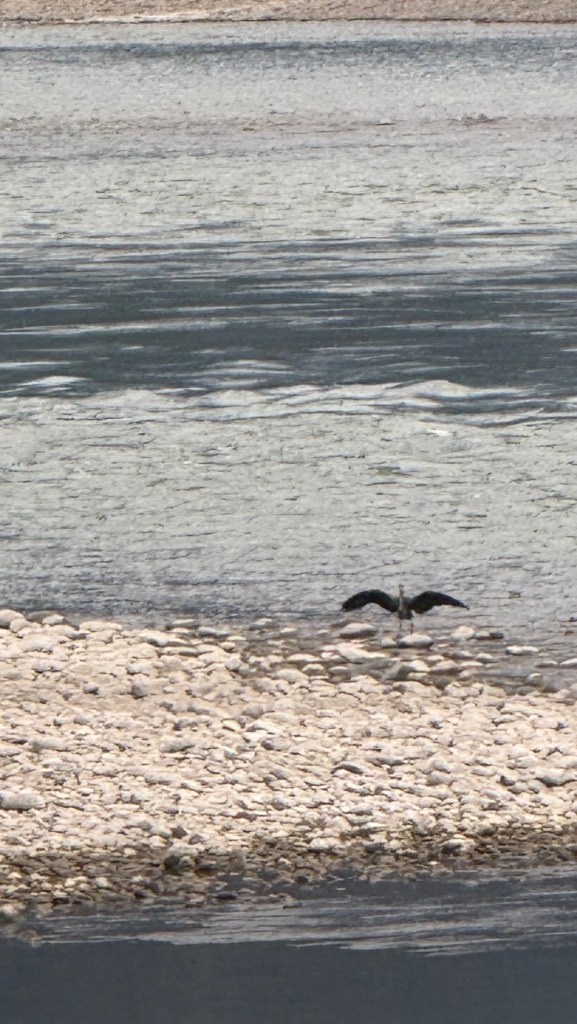
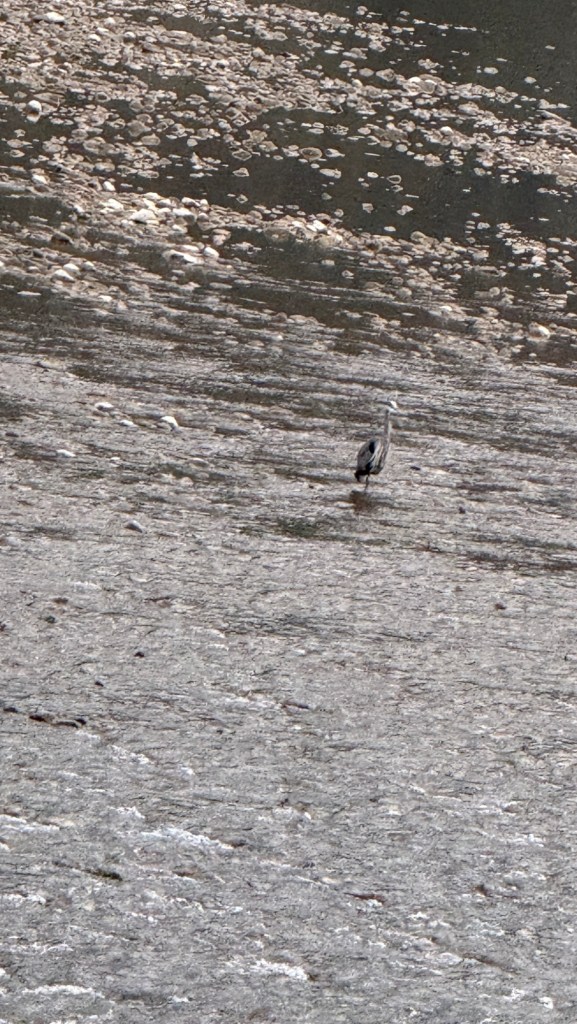
We arrived at our ‘go to’ place in Hope, right on the Fraser River. We watched herons fishing and relaxed the evening away.
Today I was feeling very reflective of the past year and a half.
September 24th is aHUS/cTMA global awareness day. A year and a half ago, had you asked me if I could/woud do a trip this long, this far away from home- I most certainly would have said no.
Eric and I reminisced about how grave things were in Feb of 2025, to where I am now. It’s remarkable in so many ways.
Here’s what I shared on socials, and I’d like to share it with you here.
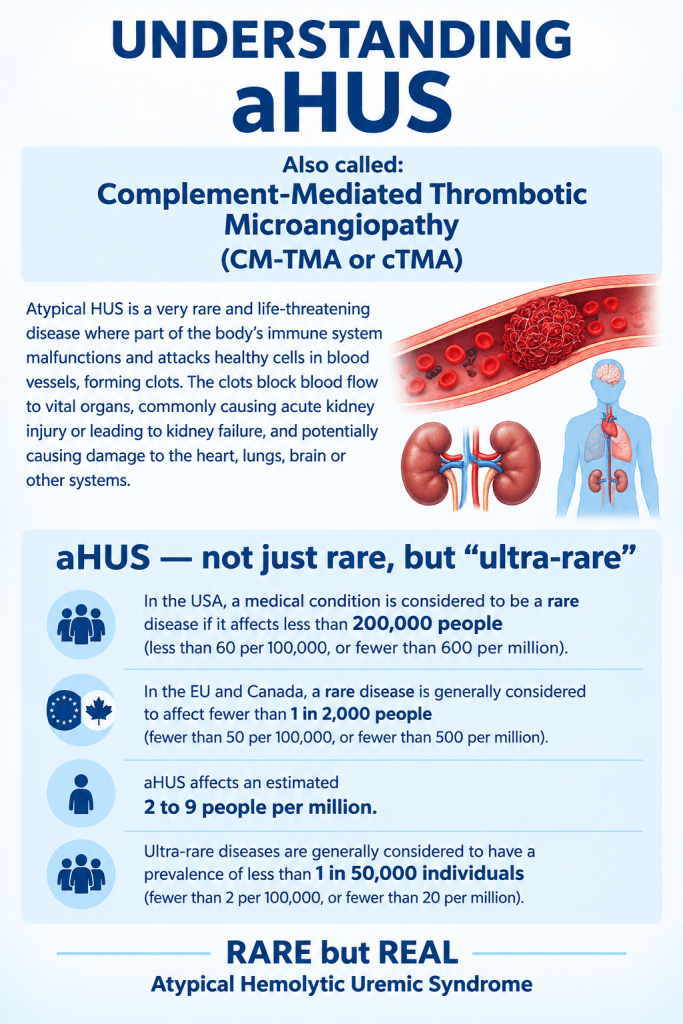
September 24 is aHUS / cTMA Awareness Day. 💙
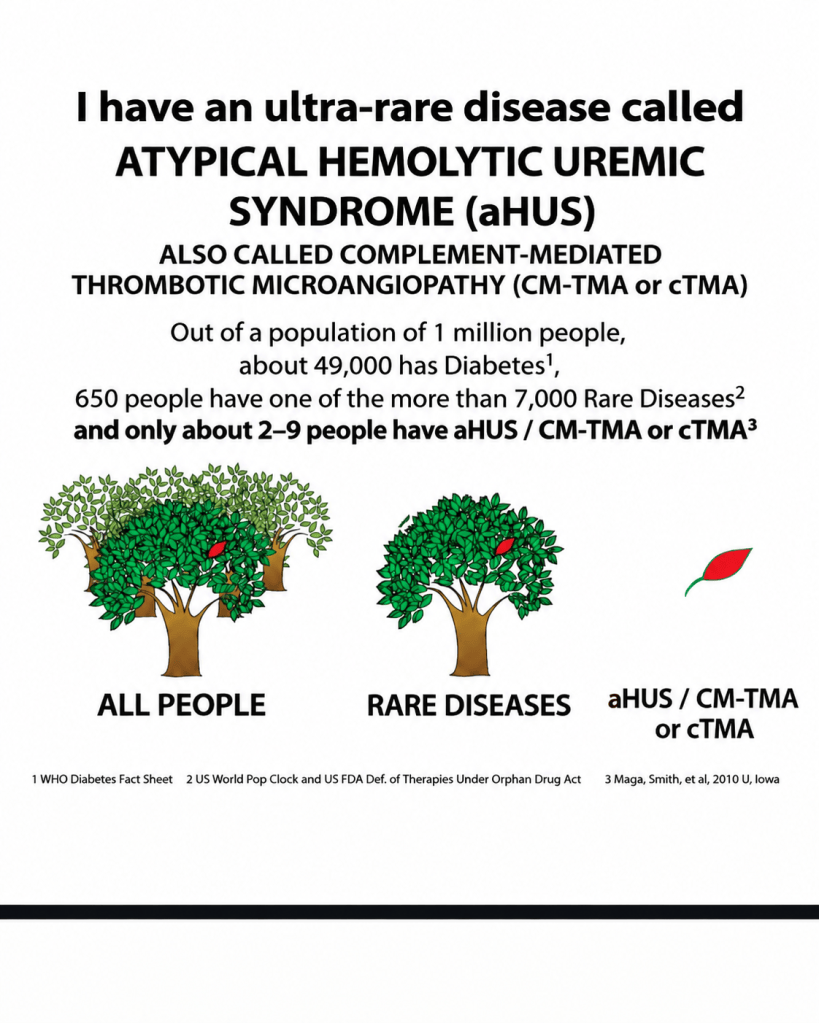
On February 14, 2025, I was hit with a disease I (nor my family) had never heard of: atypical hemolytic uremic syndrome – also called aHUS or complement-mediated thrombotic microangiopathy (cTMA).
I almost didn’t make it. 3 Hospitals, 12 days, countless labs and other diagnostics, and one infusion later, I was diagnosed. I remained in hospital for almost 4 weeks.
aHUS/cTMA is an ultra-rare, life-threatening disease in which tiny blood clots can form in small blood vessels, damaging organs – especially the kidneys, but potentially the heart, brain, and other parts of the body too. It is not always easy to recognize, and there is no single test that confirms it. Early symptoms can be vague, which makes timely diagnosis and urgent medical intervention so important.
I am incredibly grateful for my amazing medical team, for the people who recognized how serious this was, and for the treatment that helped save my life. The medication I have been receiving costs approximately $1 million per year- a figure that is hard to wrap my head around – but access to it has given me the chance to recover and keep moving forward. (Not universally covered in BC)
I recently chose to cease my infusions to see if I can manage without. Many people do. Now we wait and see how things go. If I relapse, my team knows what it is and can move quickly to get the medicine to me. That knowledge, planning, and rapid response matter more than I can say.
A flare can sometimes be triggered by things many people would not immediately connect to a rare disease, including:
- Bacterial or viral infections
- Pregnancy or the period shortly after giving birth
- Certain medications, including some chemotherapy drugs, immunosuppressants, and oral contraceptives
- Organ or bone-marrow transplantation
- Cancer, autoimmune diseases such as lupus, or severe high blood pressure
This is not to suggest that everyone with these triggers will develop aHUS/cTMA – but for someone who’s complement system becomes disregulated, as mine did – an event like an infection can set off a medical emergency – as mine did.
I’m on a pretty short leash for the next year.
The symptoms can involve kidney injury/kidney failure, low platelets, destruction of red blood cells, severe fatigue, swelling, nausea, headaches, high blood pressure, confusion, or other symptoms that may not seem connected at first. Because it can look like other conditions, it is often diagnosed only after urgent testing rules out other causes of thrombotic microangiopathy.
I’m sharing this because awareness matters. A disease that is recognized sooner can be treated sooner. And when minutes, hours, and days can affect organs, recovery, and survival, education can make a real difference.
Please take a moment today to learn about aHUS/cTMA, share this post, and help make this ultra-rare disease a little less invisible.
I am here. We are just winding up a 42-day road trip to Tuktoyaktuk, NWT! Something I didn’t think I’d ever be able to do.
Am I 100% healed? No. Is there residual damage to my body? Yes. Is it manageable? Absolutely.
I am grateful. And I am taking things one day at a time. 💙
With a heart full of gratitude for this fantastic adventure, I will wind down my posting on THIS trip – and we’ll start planning our adventure for next year!
We’ll be home in a couple of days, and tomorrow takes us into Vancouver and that is no road less travelled!
Cheers!


Leave a comment